
Last week the first edition of the HackTheAlps hackathon took place at Kronplatz, in the province of Bolzano.

The theme of this hackathon was designing and building, in less than 48 hours, a sustainable project able to fit into life in South Tyrol.
The location was stunning, the challenges much less so. Not knowing the area and the way of life of South Tyroleans, we couldn’t come up with something able to fit into the local way of life. So we decided to go for another challenge, a much more creative one: Design Your Dream “Banking” App. A choice that, in hindsight, we definitely wouldn’t make again. The challenge turned out to be far too open.
Baank.ly
Baank.ly is our project, the bank in nature. The project features an innovative access interface, set in nature.
Transaction management
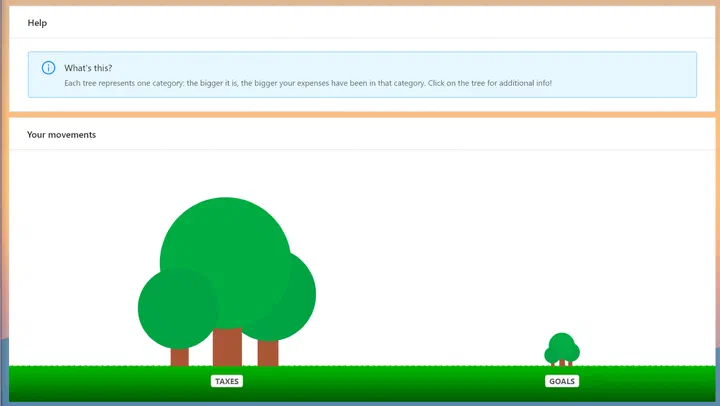
Thanks to the tree chart you can see how much you’ve spent in the various categories. The categorisation system is based on a very dumb machine learning algorithm.
Goal management
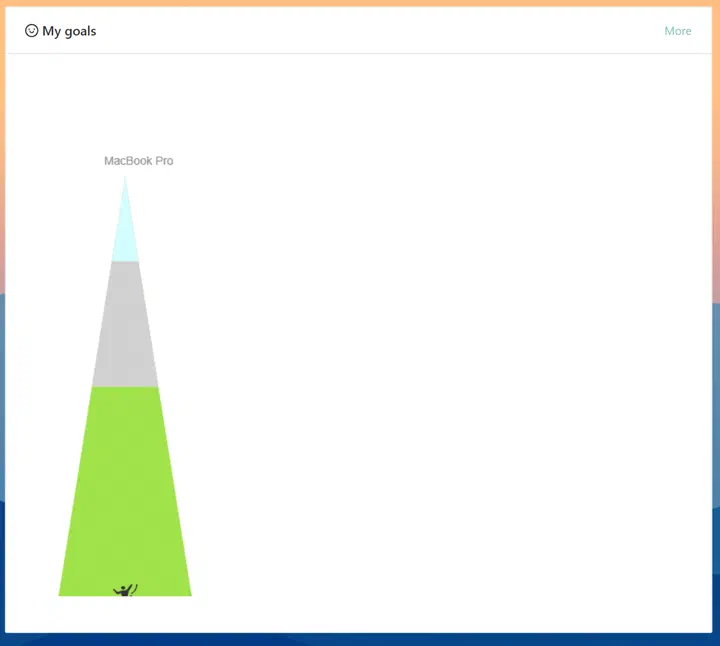
The account management interface offers an innovative way of managing goals. You can set money goals, which are then shown as a mountain chart. The man climbing the mountain represents the customer trying to reach the goal.
GPS Payment
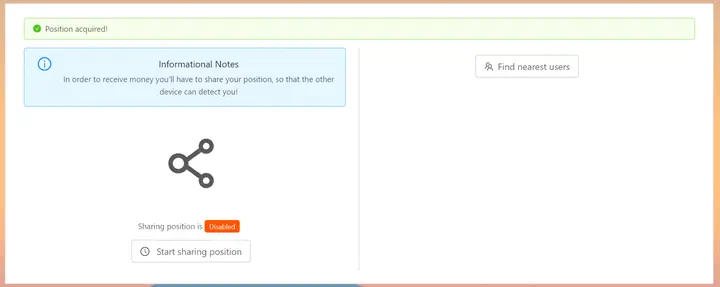
The system offered an innovative fast payment system: GPS-based payment. The system is in fact able to locate all “nearby” users and send bank transfers with a simple tap, without having to exchange IBANs and other checks anymore.
Integration with South Tyrol
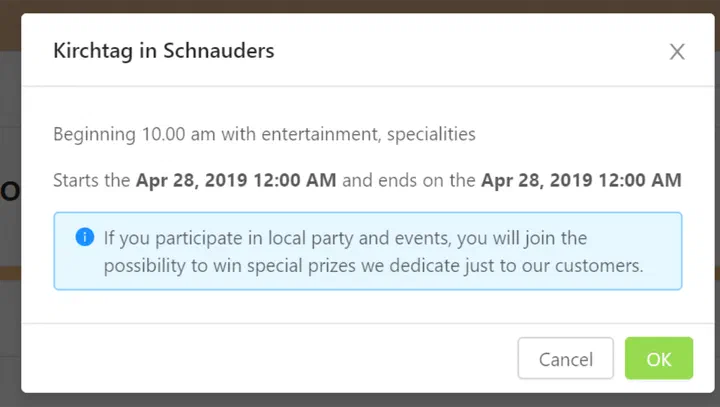
Every week the customer will be invited to take part in an event in the area. If they take part, they can get discounts or even prizes. The events are loaded from South Tyrol’s Open Data.
Technologies
We built the backend in PHP and Symfony. The frontend, instead, is built with React using the Ant library for the UI.
The source code is available on git.oneam.it: backend and frontend.
During the hackathon we got the chance to test South Tyrol’s Open Data Hub. During the testing phase we found several vulnerabilities, including the possibility of doing SQL injection and of crashing the server by asking for responses that were too large. We reported the problem to the portal’s operators right away.
I find it unacceptable to still find this kind of vulnerability in 2018. We have thousands of frameworks and languages that try in every possible way to prevent this kind of mistake; sometimes it almost becomes harder to add the possibility of SQL injection than to remove it. Open data Hub, you made a bad impression. Advertising a portal like that, calling it innovative to a group of hackers and leaving vulnerabilities like those. Good Job.