
Travel log
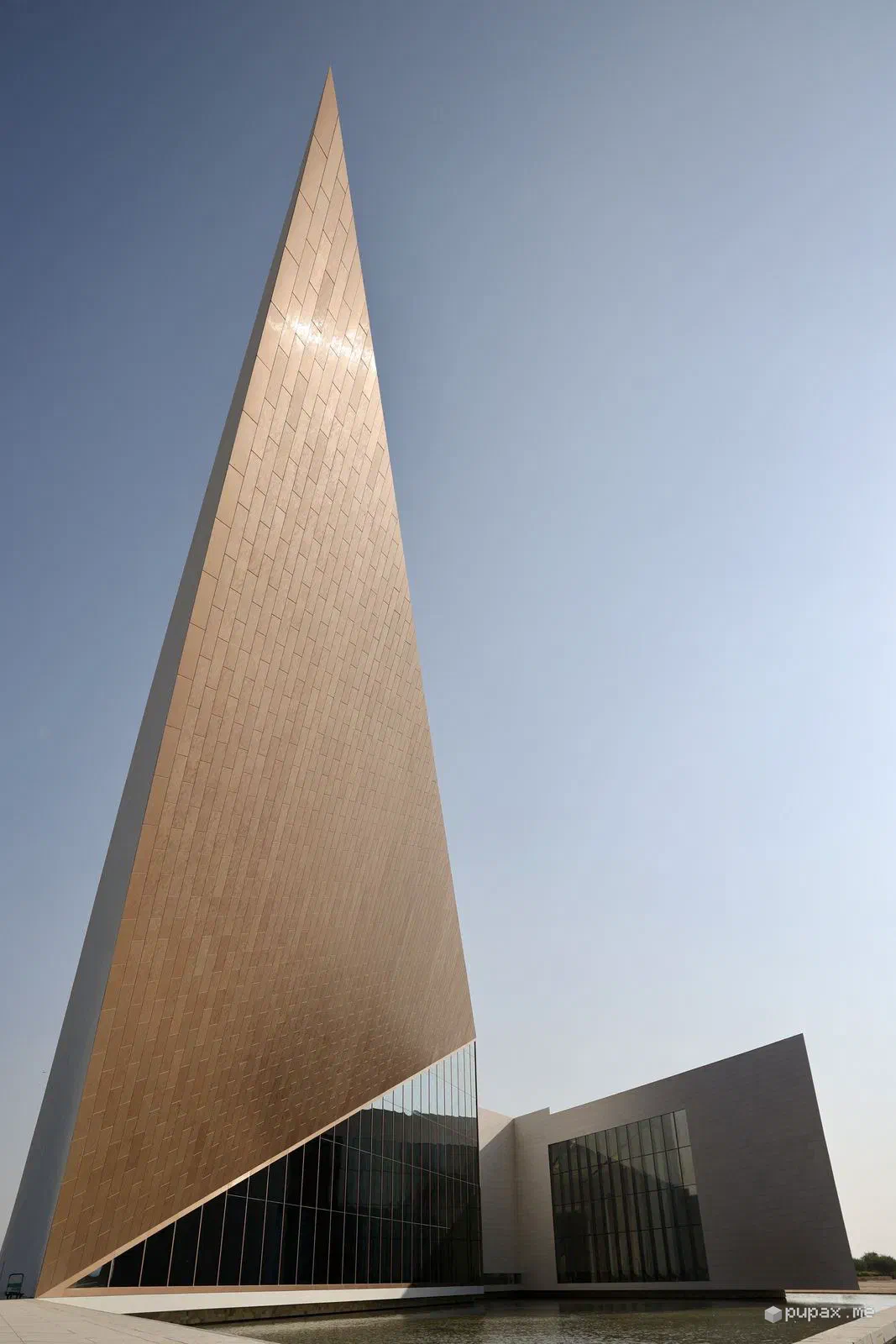
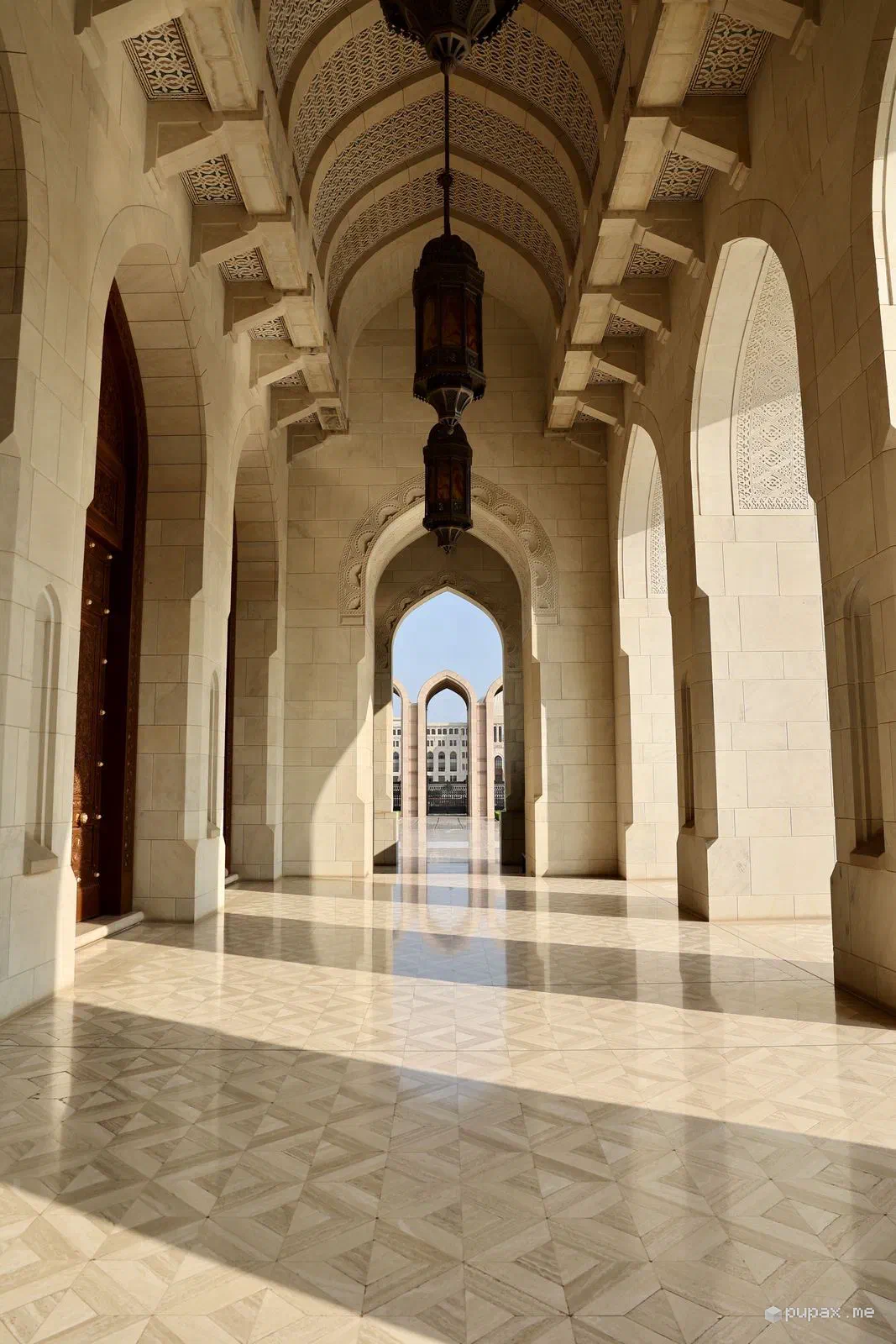
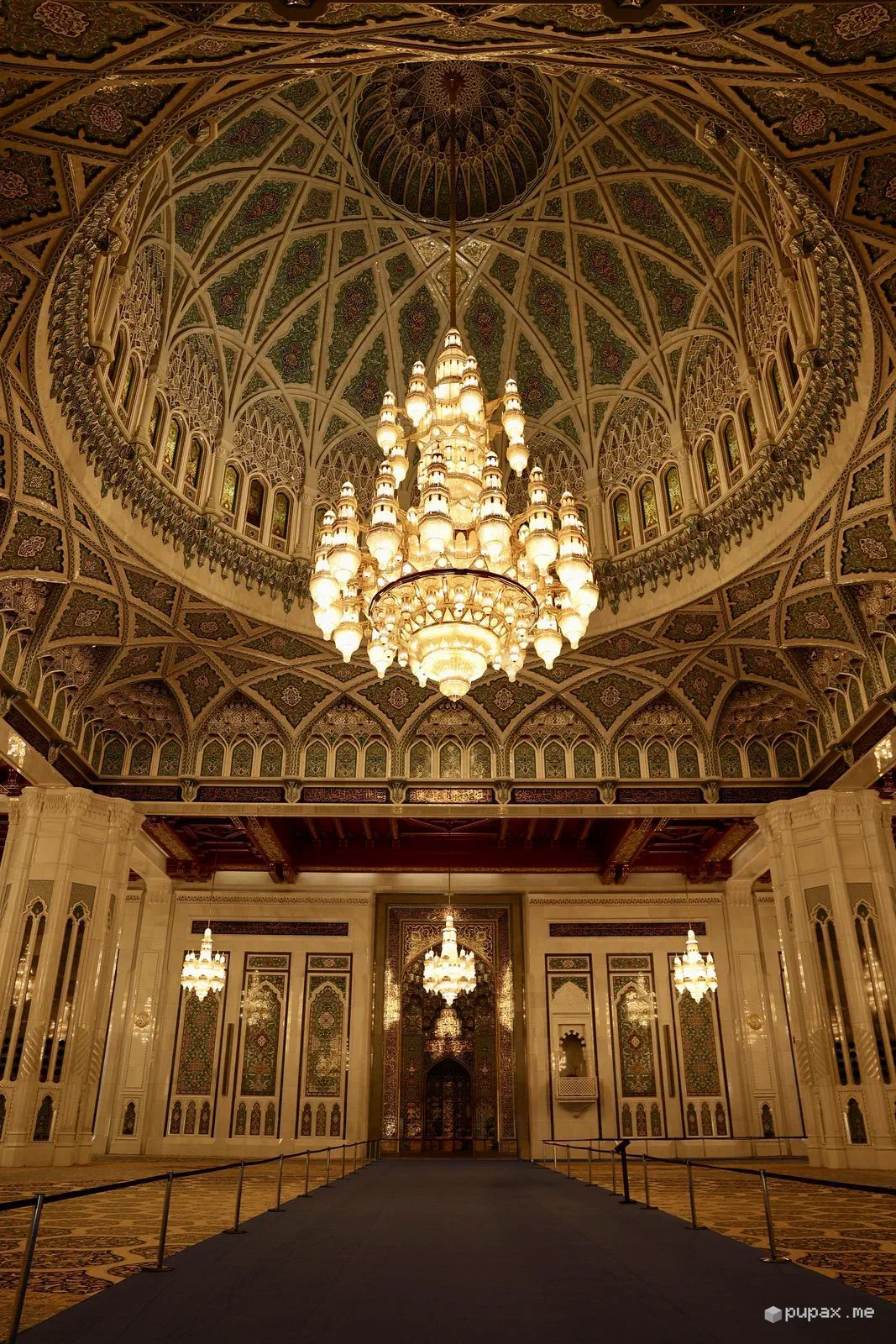
- MuscatThe Sultan Qaboos Grand Mosque
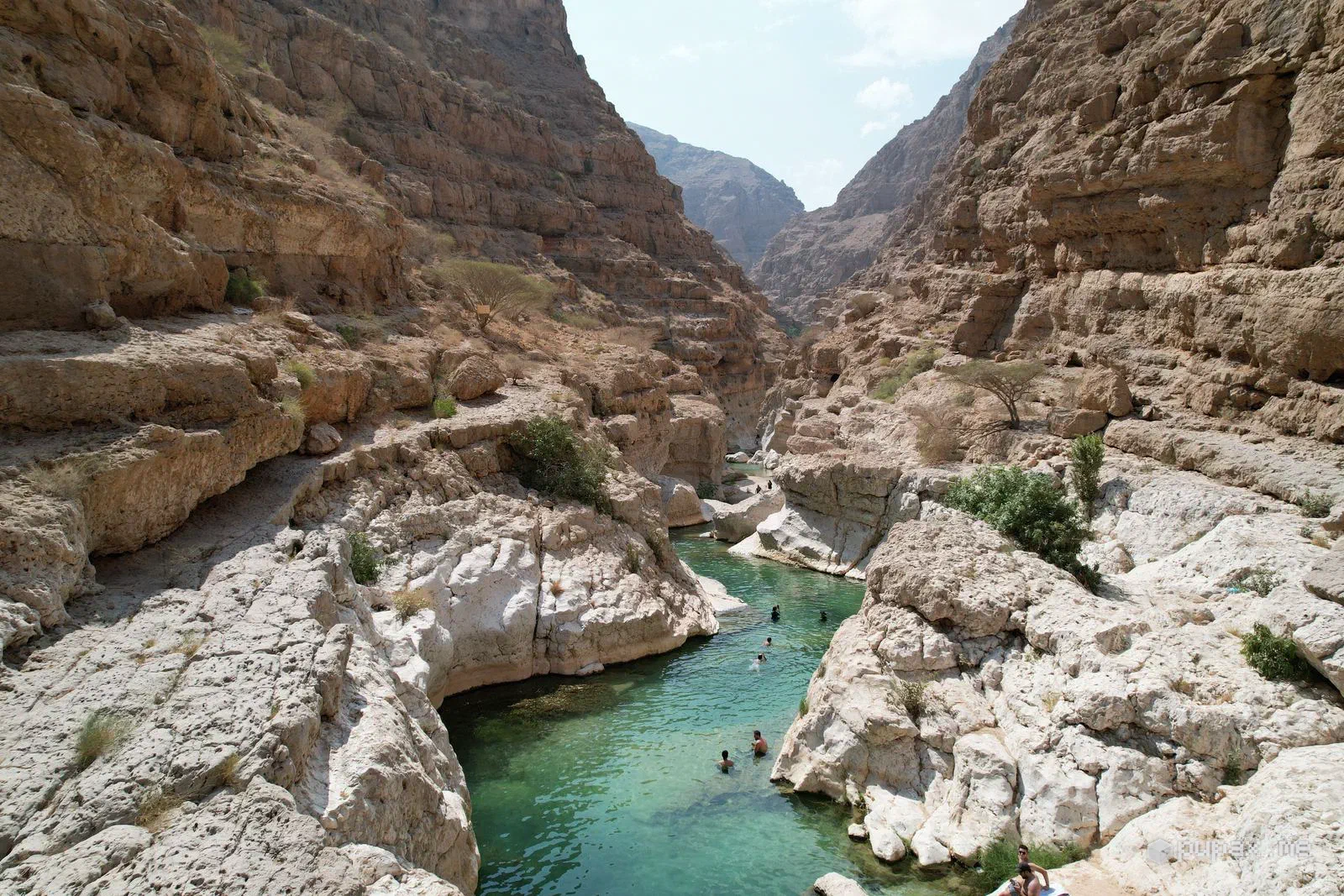
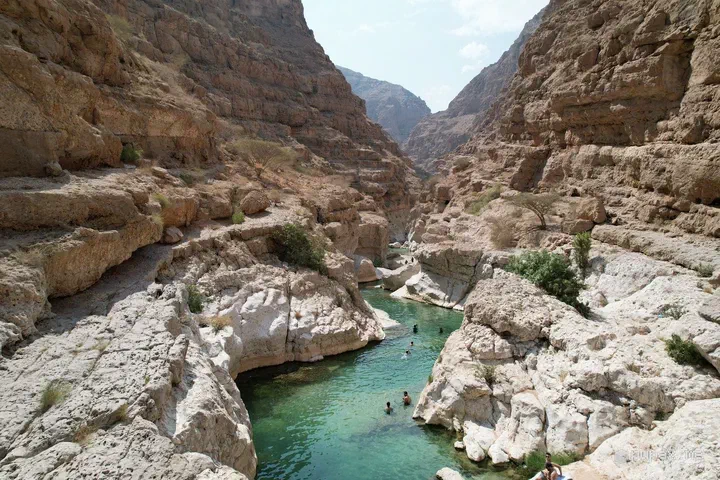
- Wadi ShabGreen pools between white rocks
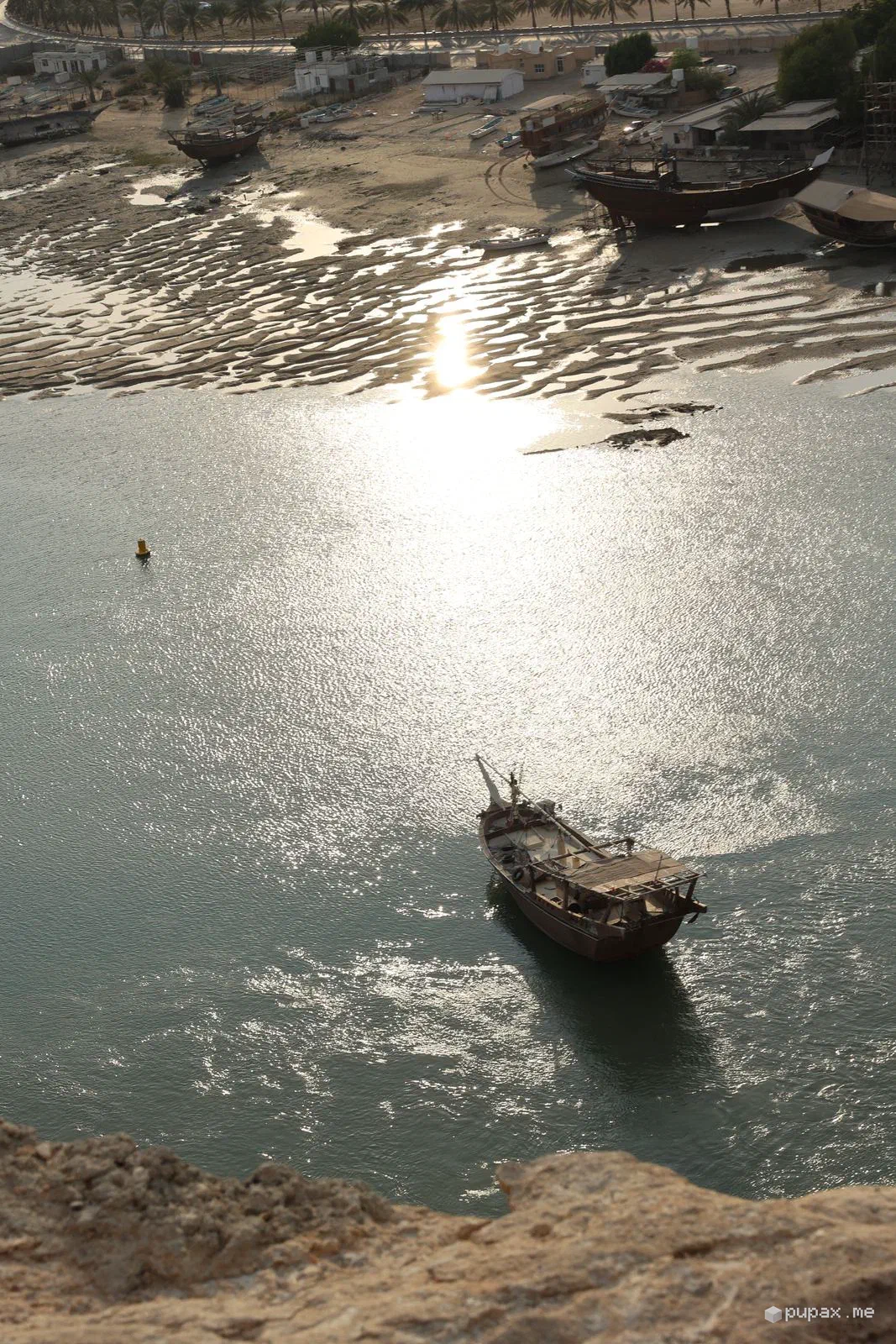
- SurDhows in the harbour
- Ras al JinzTurtles, at night
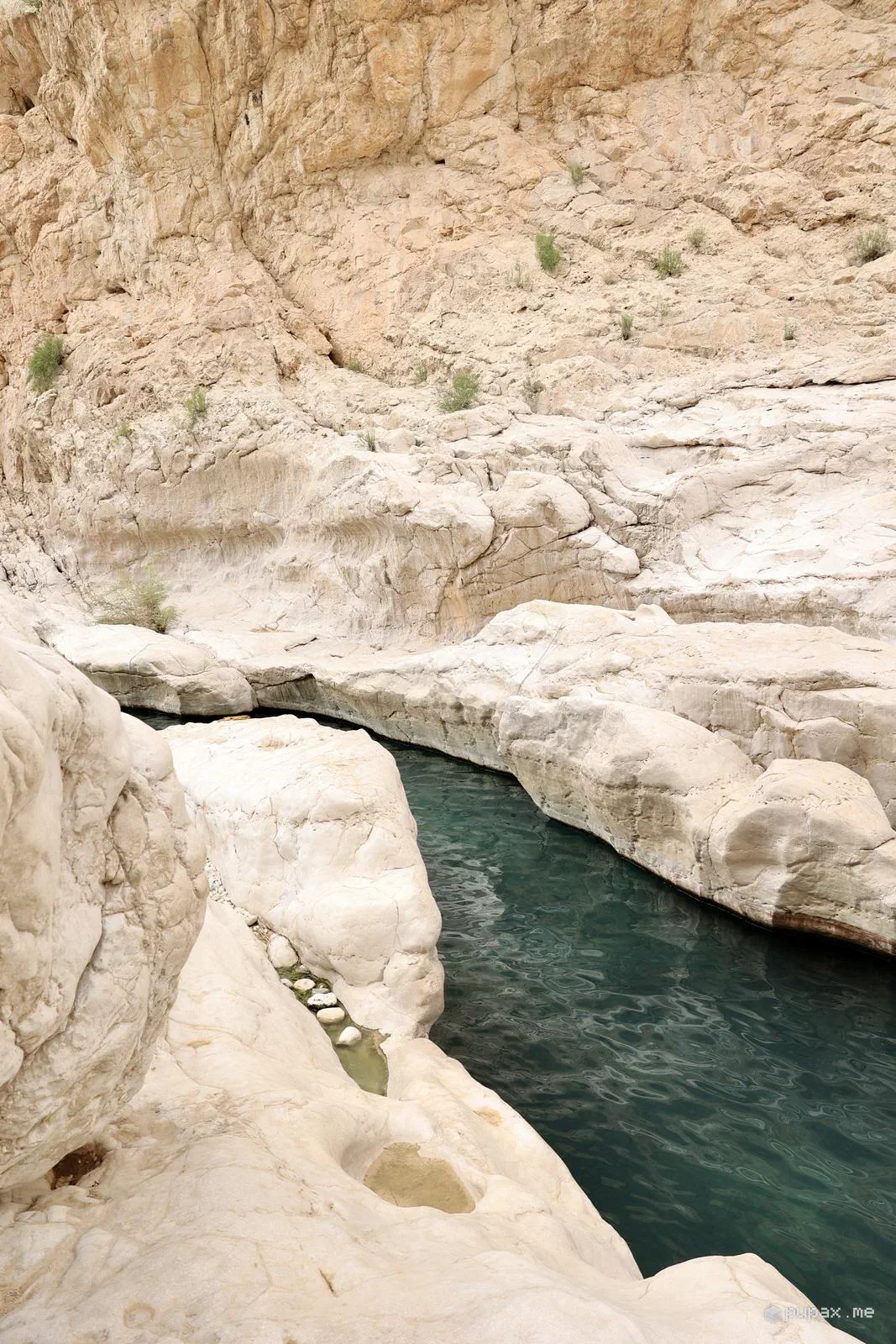
- Wadi Bani Khalid
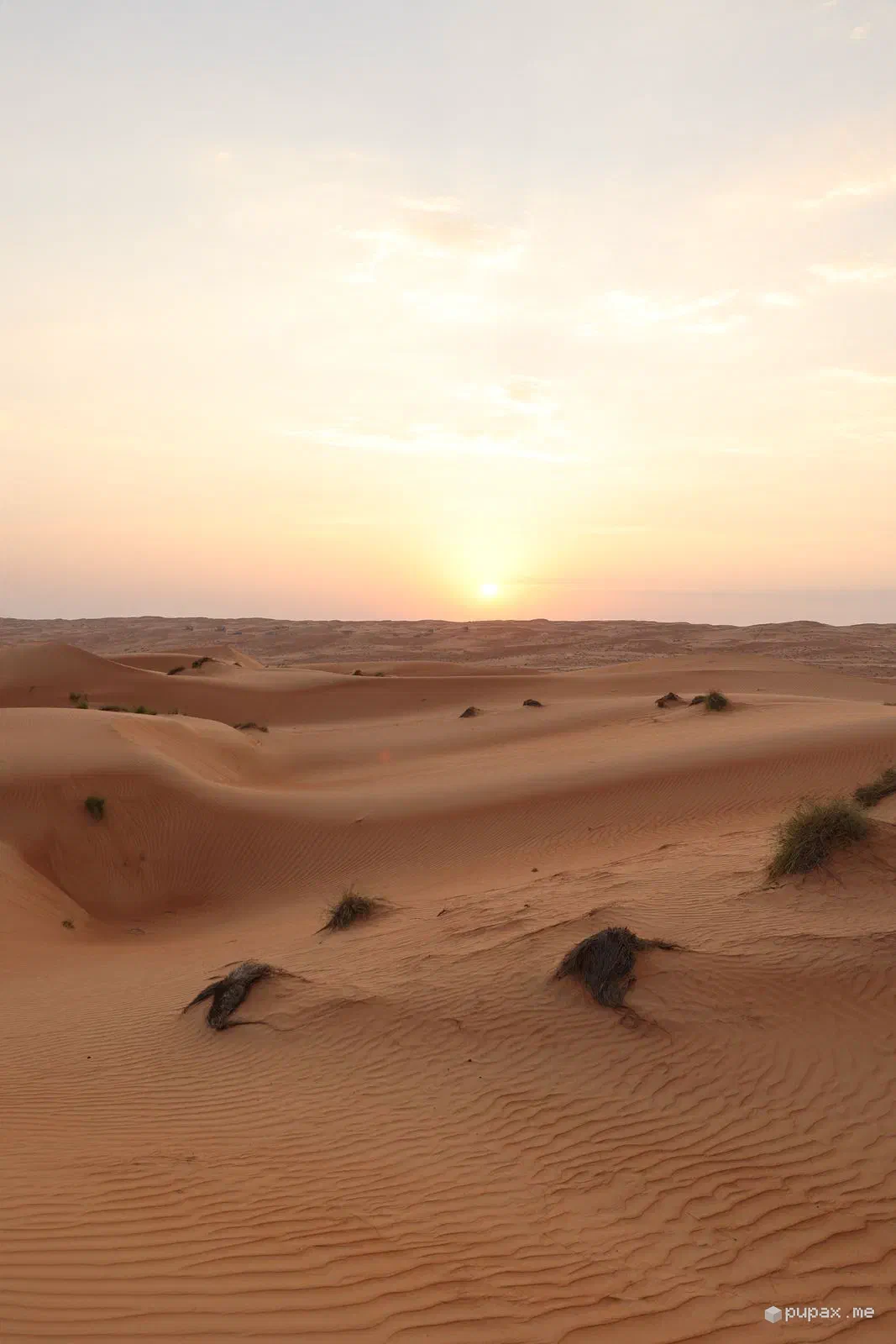
- Wahiba SandsThe dome camp and a desert driving lesson
- Al KhalufWhite dunes by the sea, and a flat tyre
- IbriThe day of the dead-straight gravel roads
- SoharThe fish market
- Wadi Bani AwfMountain tracks
- Al Hamra
- Jebel ShamsThe Balcony Walk above Wadi Ghul
- NizwaThe Friday livestock market
- Birkat al Mouz
- Daymaniyat IslandsSnorkelling with turtles
Late October 2026, almost two weeks in Oman with Francesco Lietti. The usual formula: a flight from Malpensa to Muscat, a rented 4x4 and a loop we made up as we went along. By the end the clock said 2,934 km, between the coast, the desert and the mountains.
Down the coast to Sur
Day one was Muscat and the Grand Mosque, then straight off south-east along the coast. Wadi Shab is a gorge of white rock with emerald water at the bottom: from the drone, the people swimming in the pools look like dots.
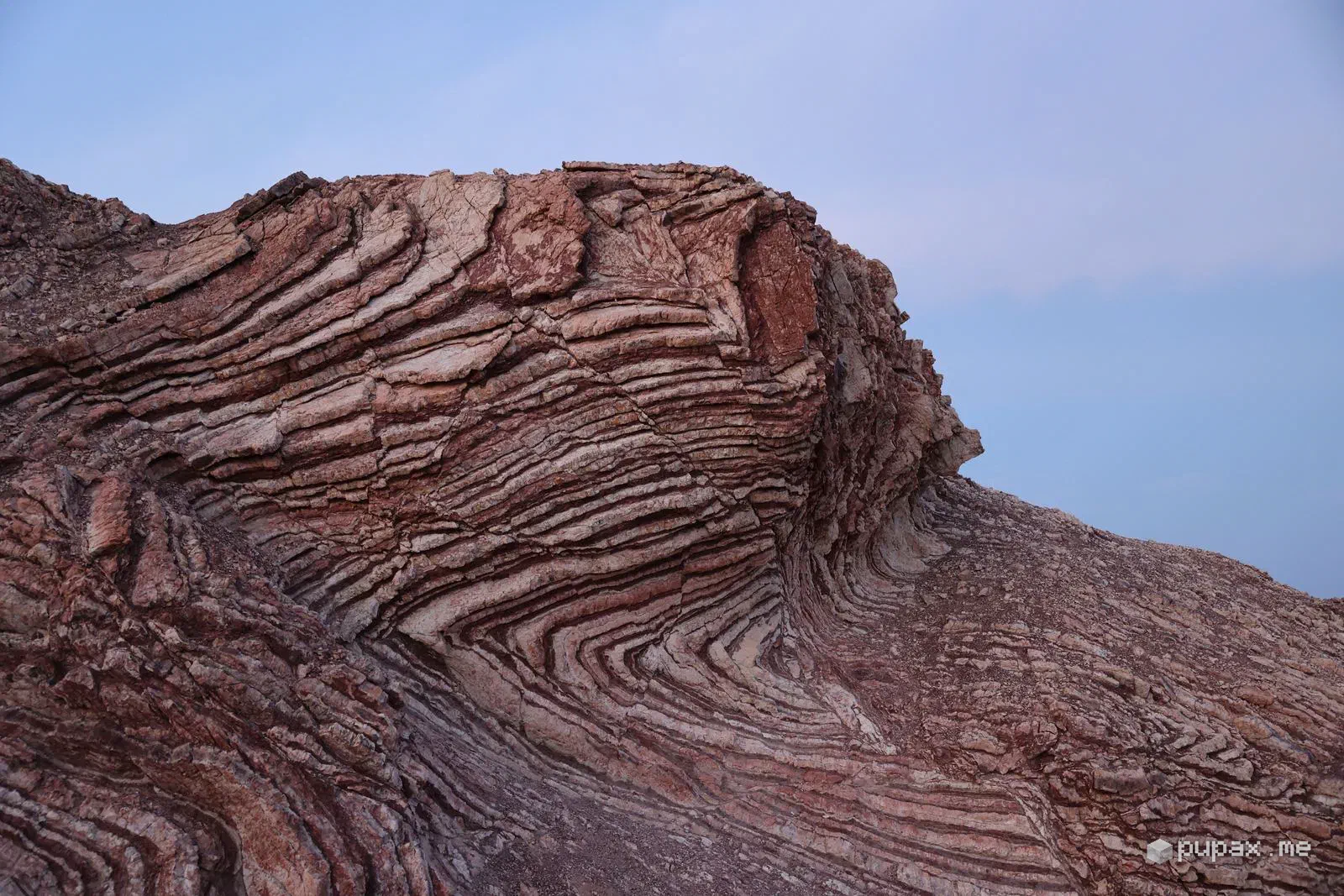
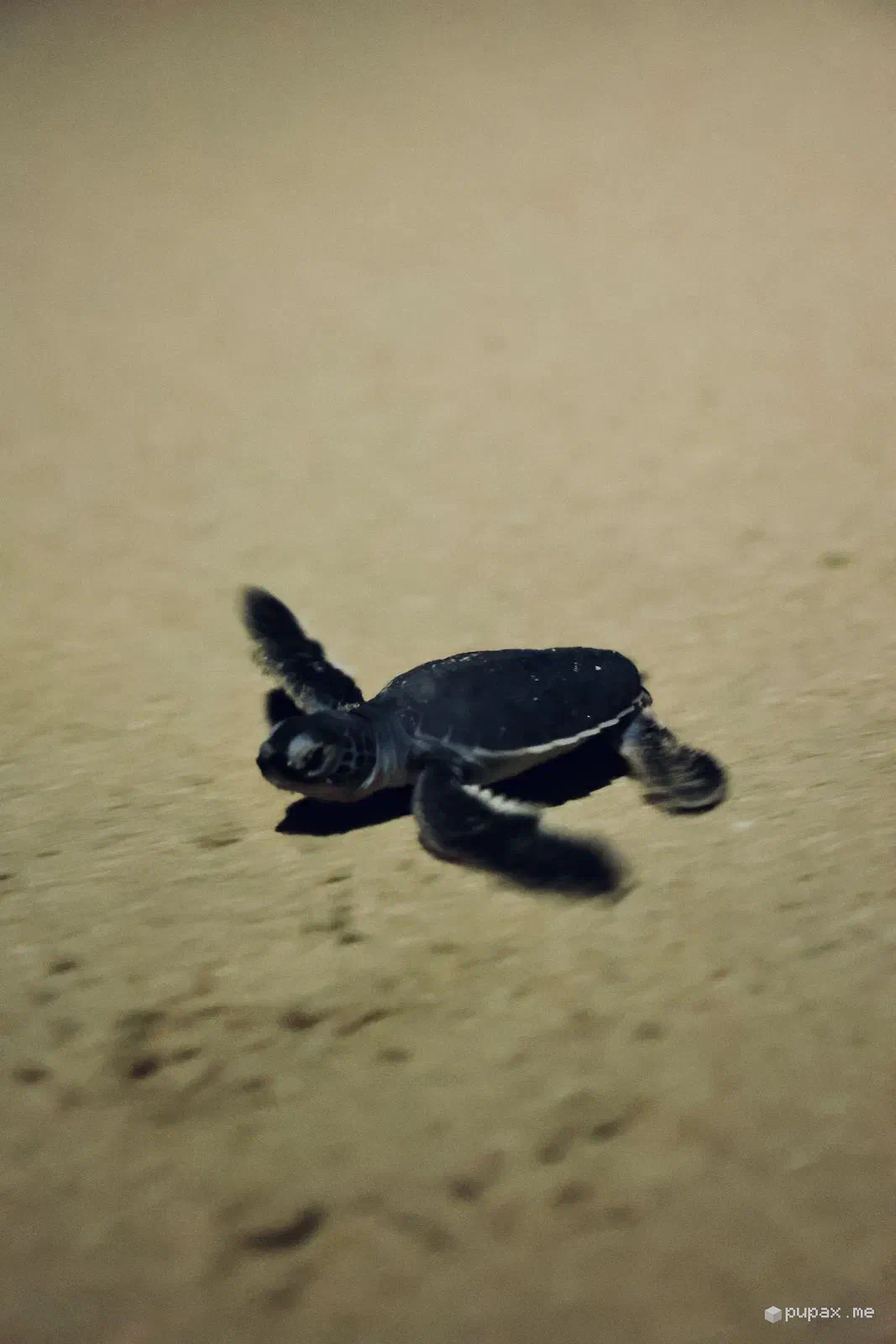
Then Sur and its dhows, the traditional wooden boats, and by the road a hill of rock folded into layers like a crumpled sheet of paper. In the evening we were on the beach at Ras al Jinz, where turtles come to nest: we saw a mother laying her eggs and a hatchling just out of the shell struggling across the sand.
The Wahiba desert
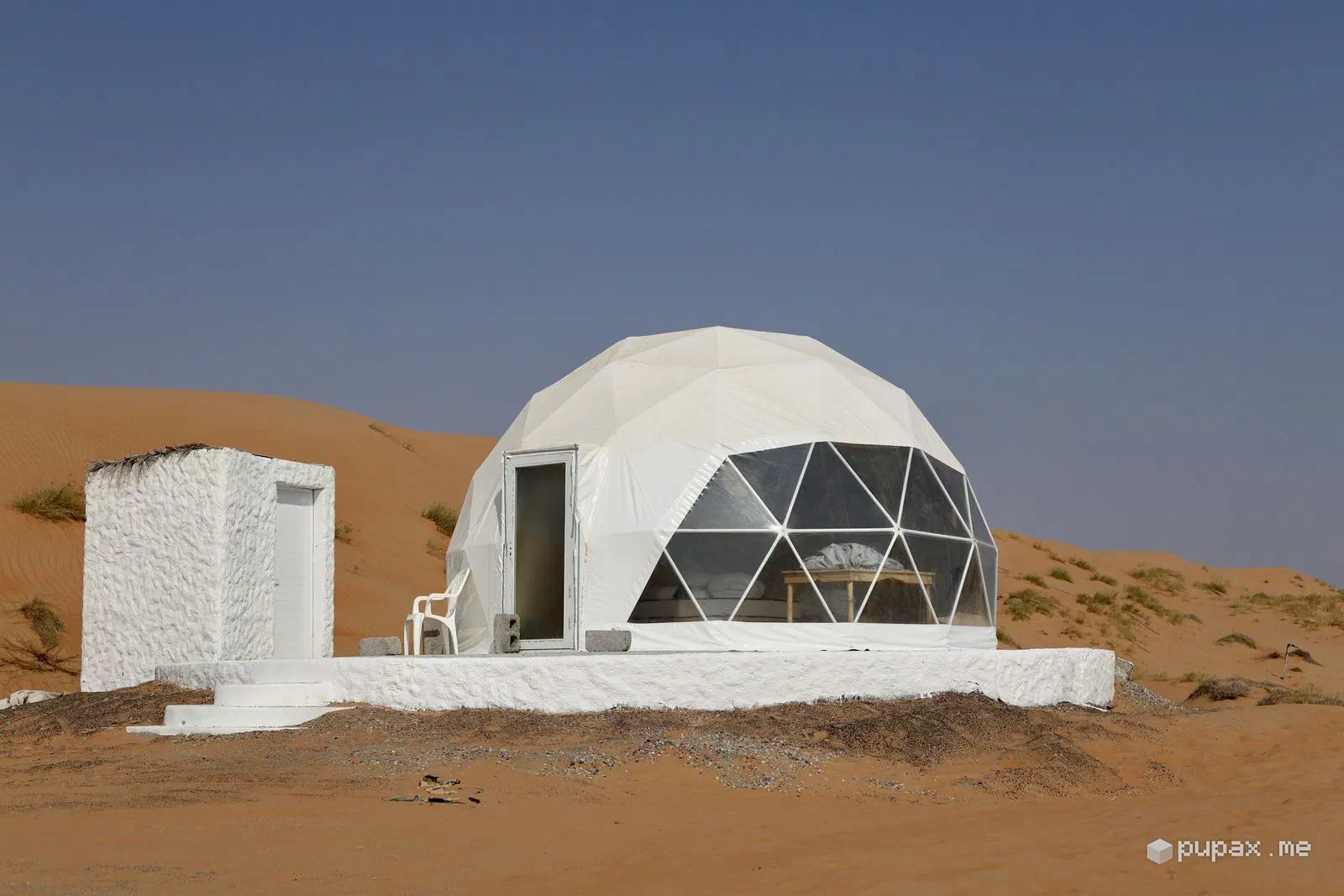
After Wadi Bani Khalid we headed into the Wahiba desert. We slept in a desert camp, in one of those white geodesic domes planted among the dunes. The next day the owner of the camp gave us a tutorial on how to drive in the desert, and then off we went, up the dunes in our SUV.
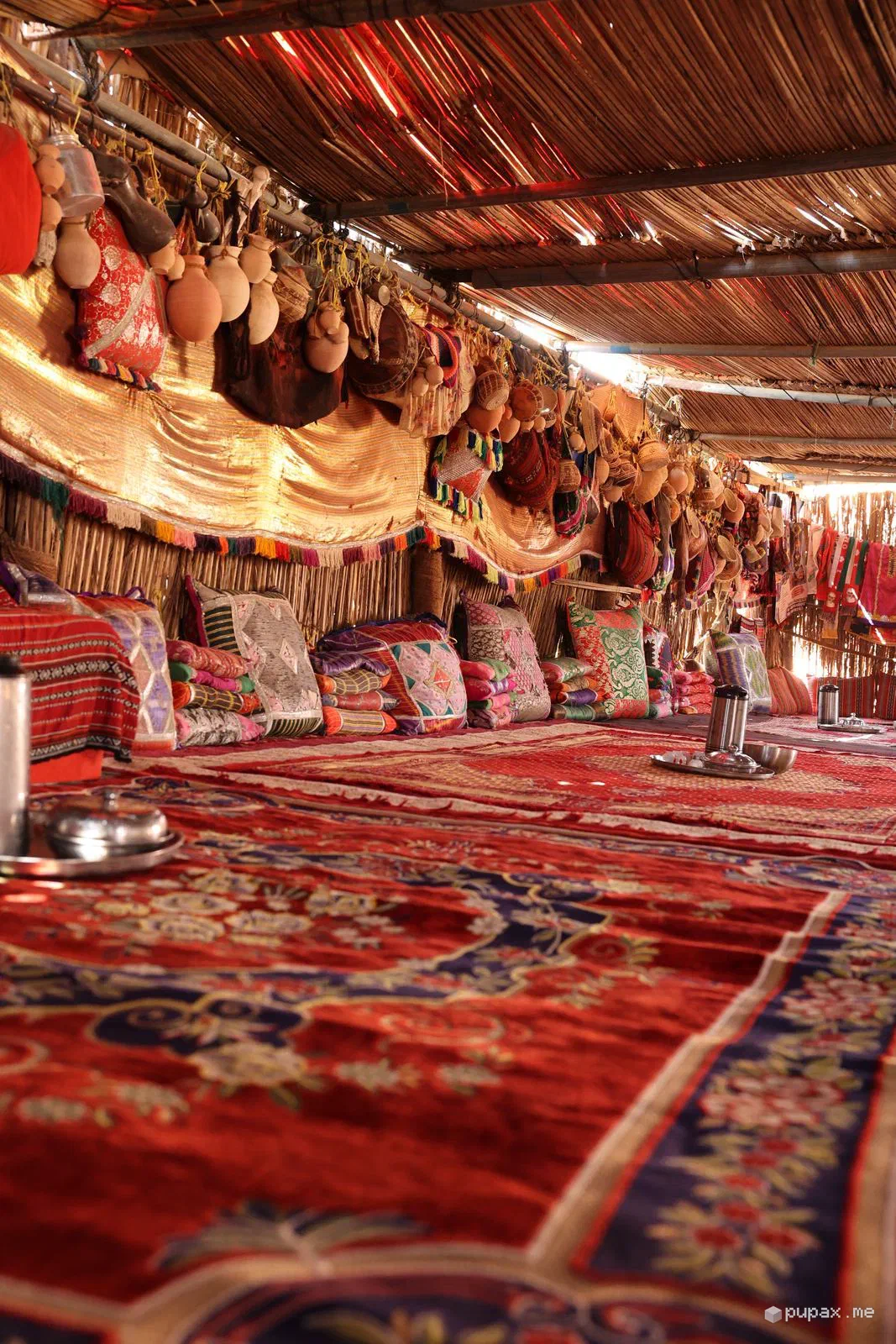
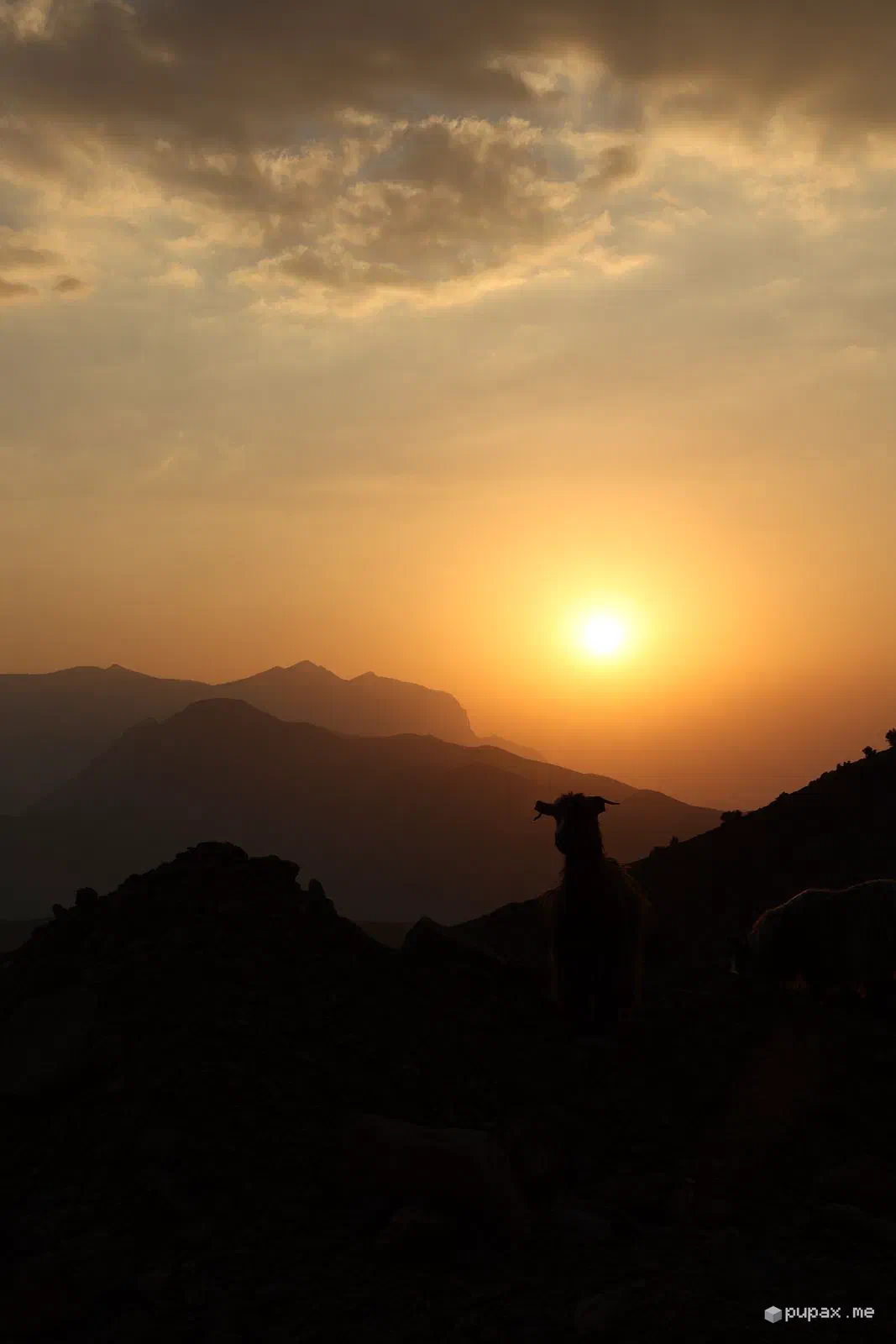
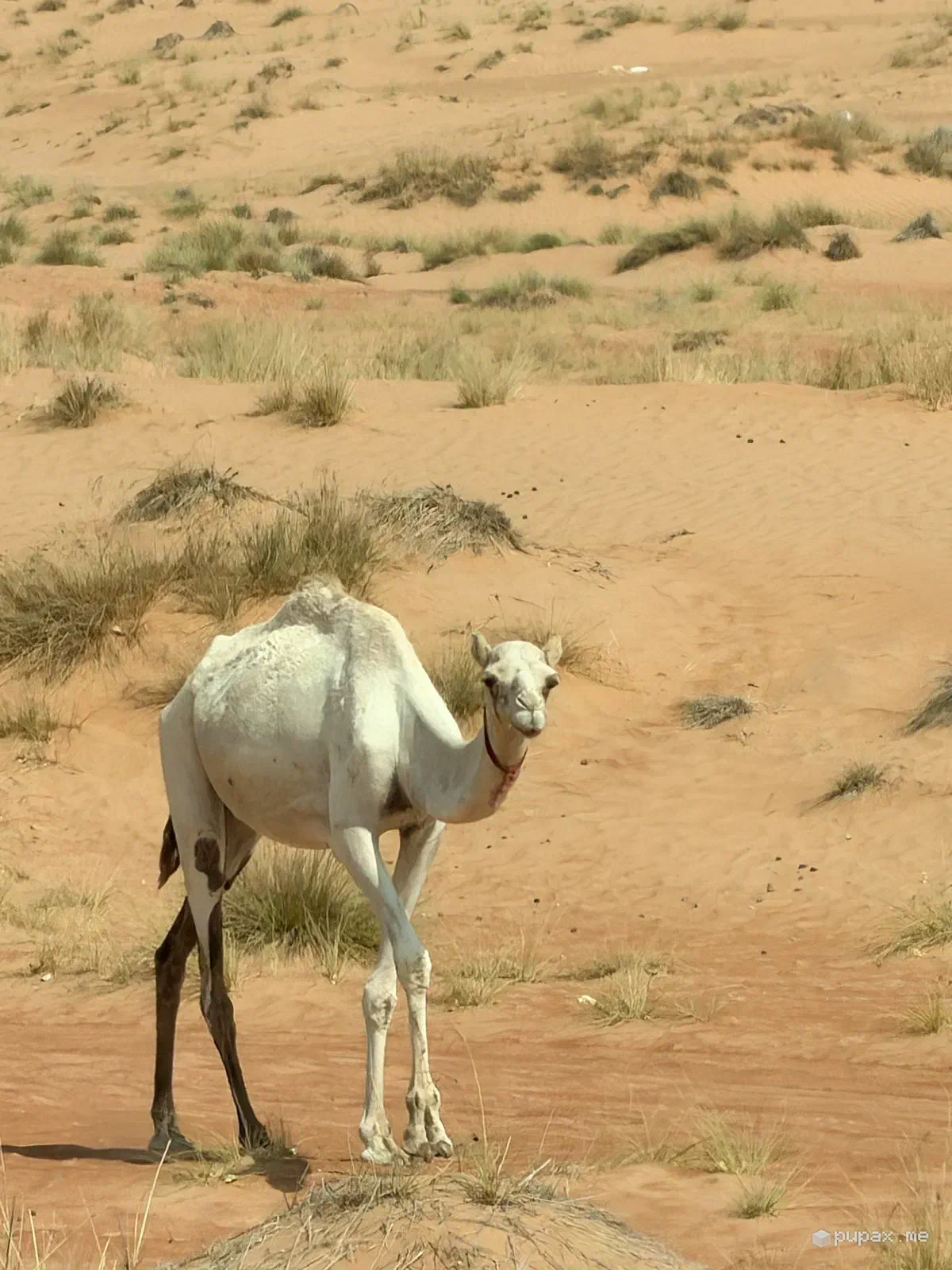
After that, a Bedouin tent, a dromedary with a red halter and the sun setting over the sand.
On to the white dunes
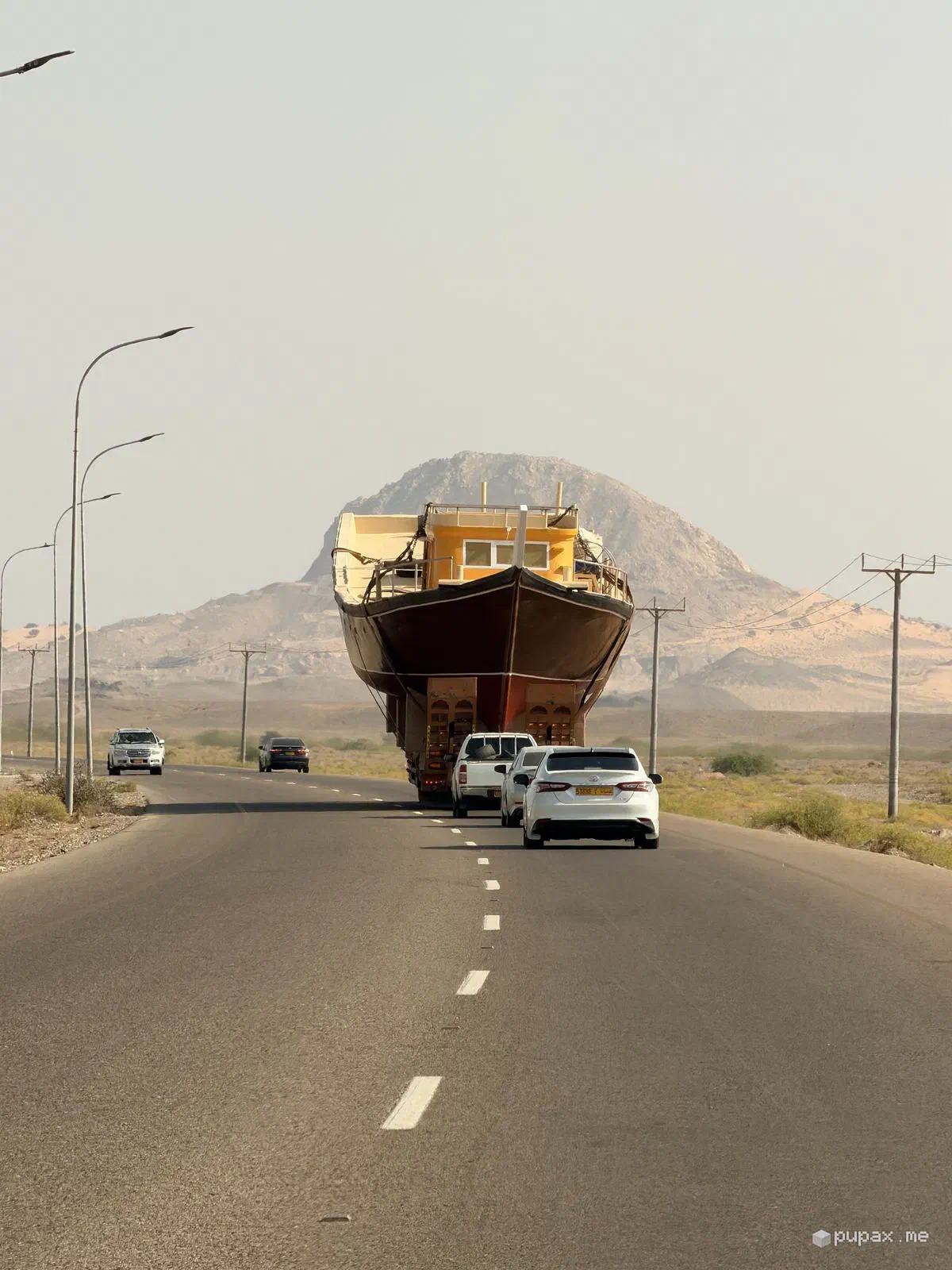
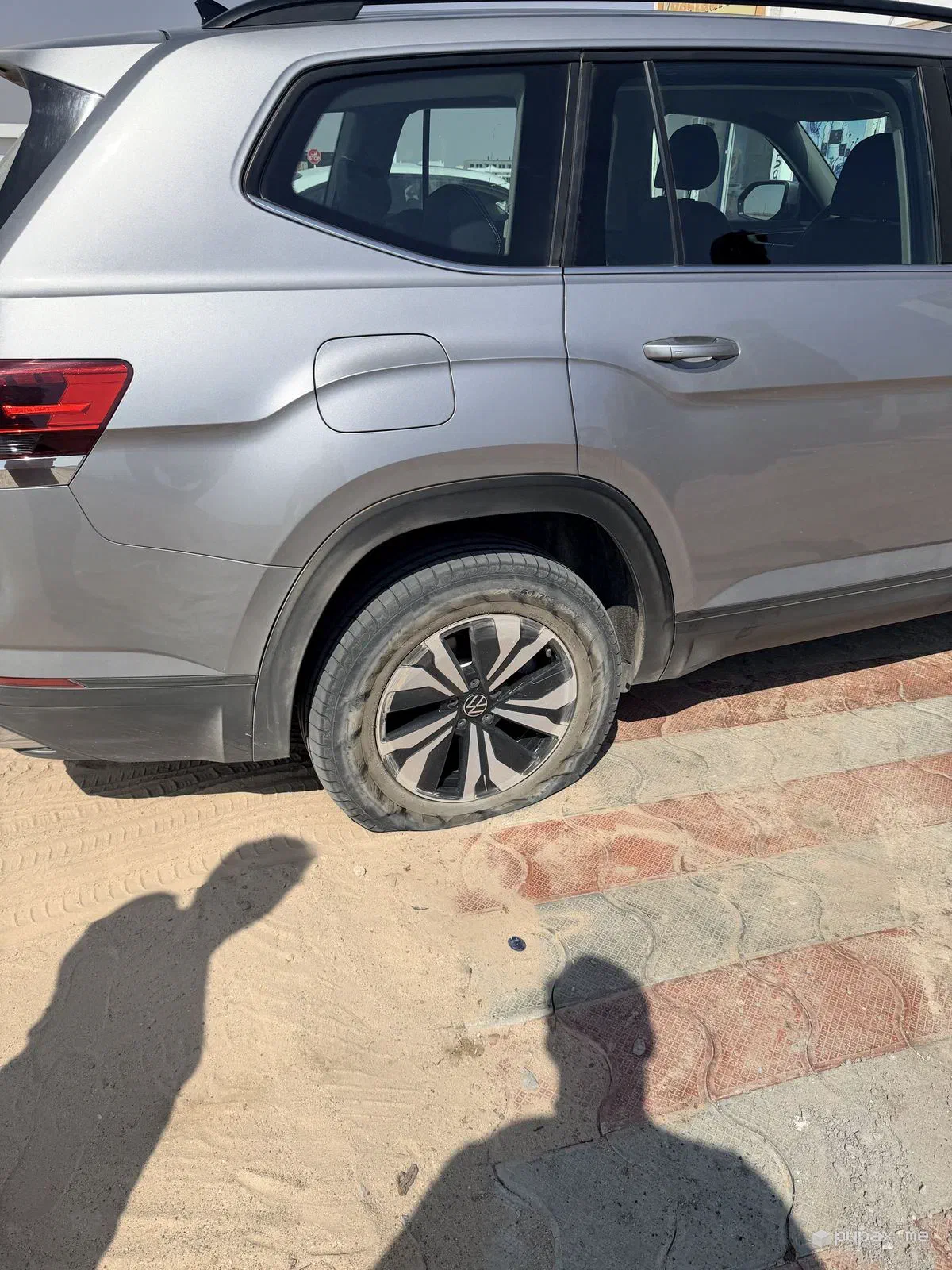
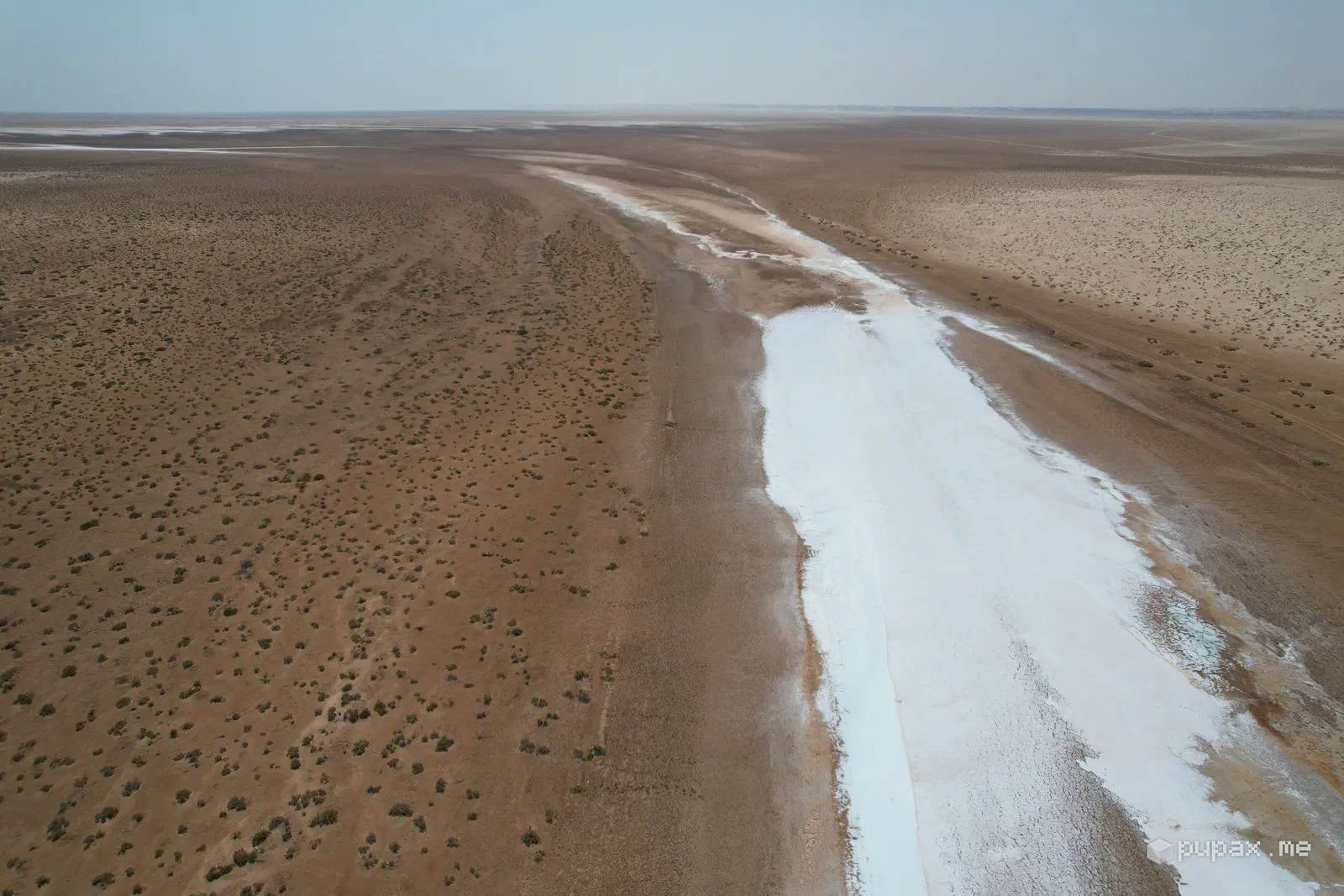
From Wahiba we drove south down the coast, passing, of all things, an entire dhow loaded onto a lorry. 1 November began with the only real hitch of the trip: a completely flat tyre. In my stories I called it “analysing the situation”; in the end a local man fixed it for us. Then miles of empty plain, streaked with white bands of salt.
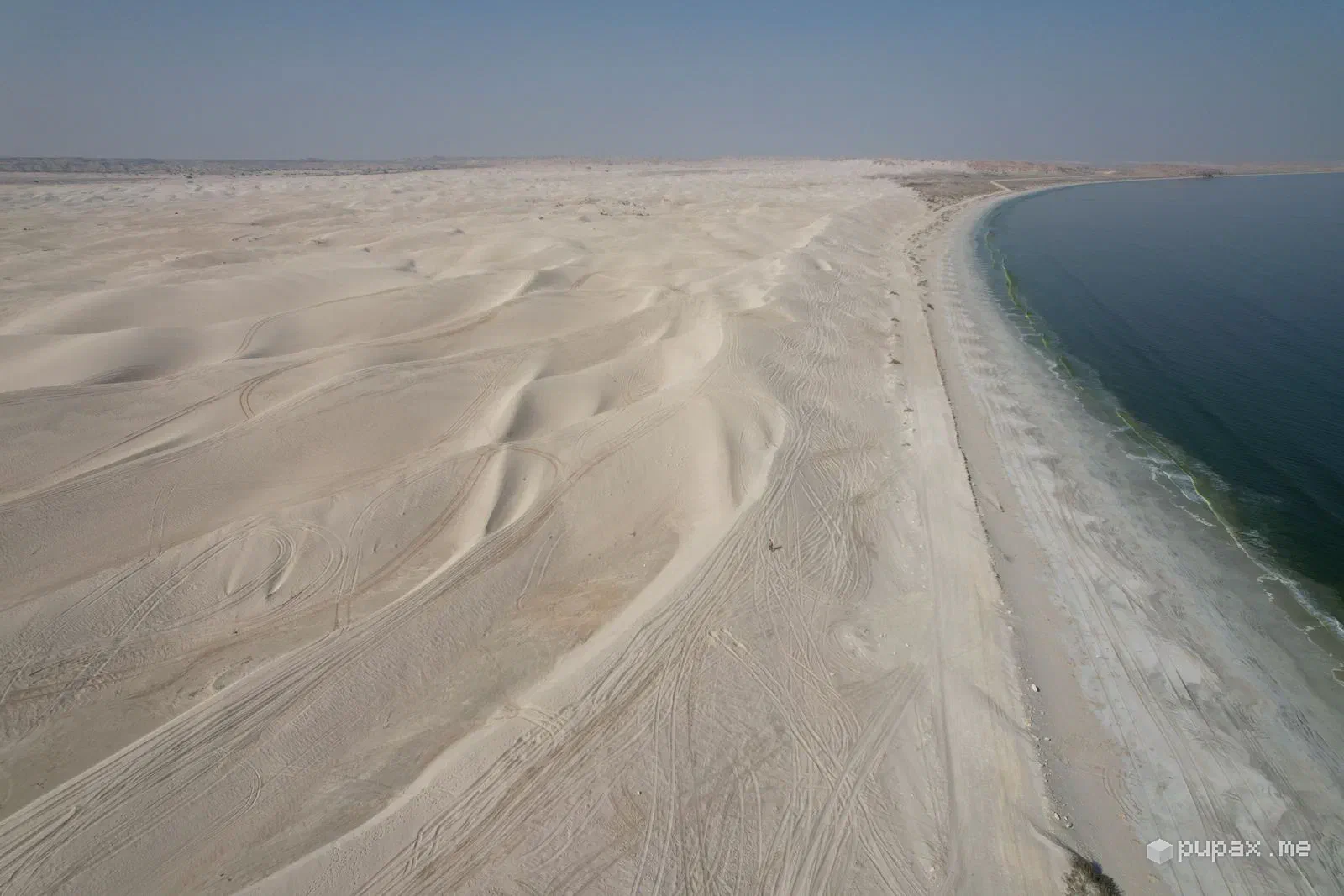
By the afternoon we were at Al Khaluf, where the dunes are white and run straight into the sea.
Across the interior
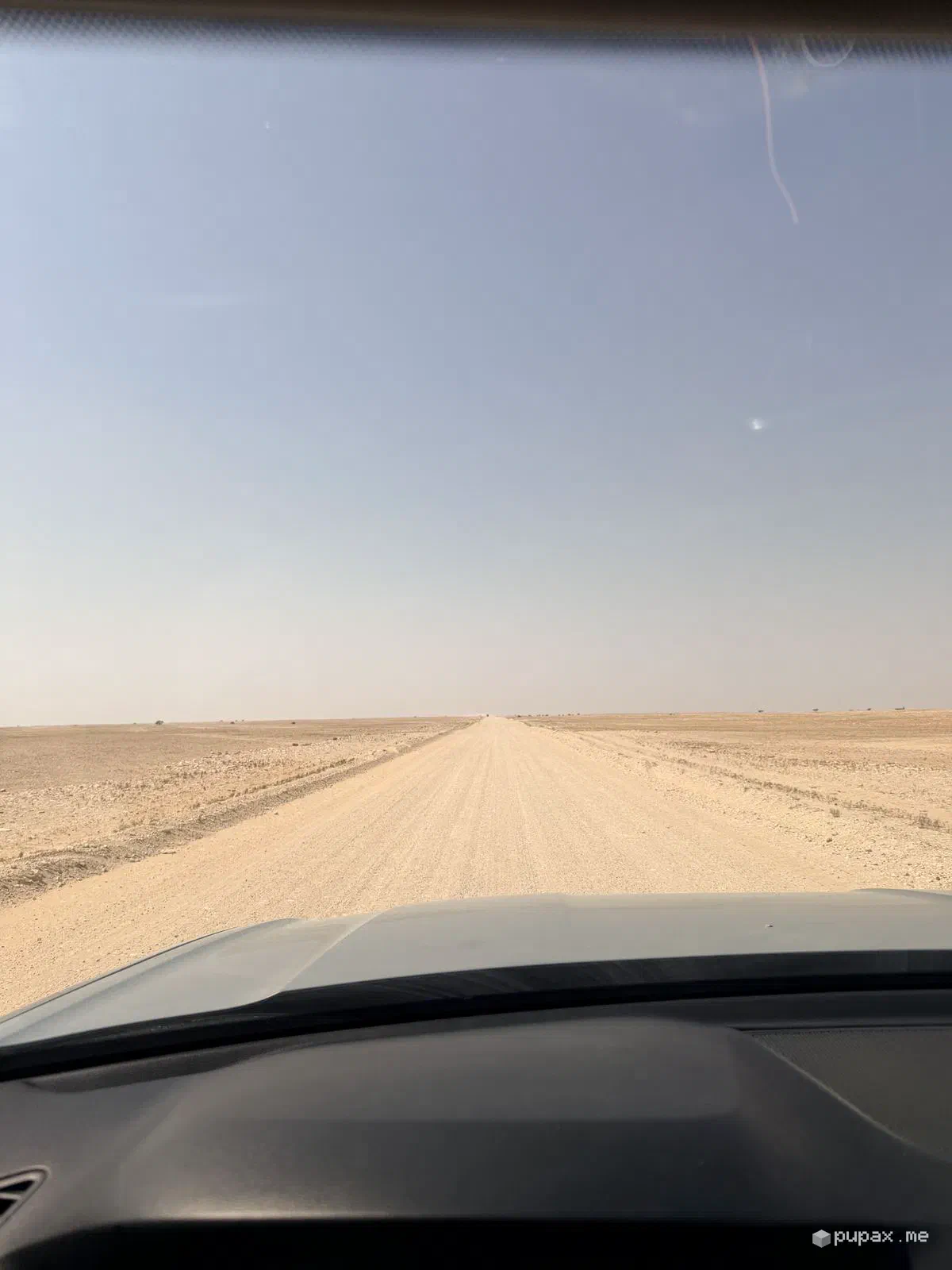
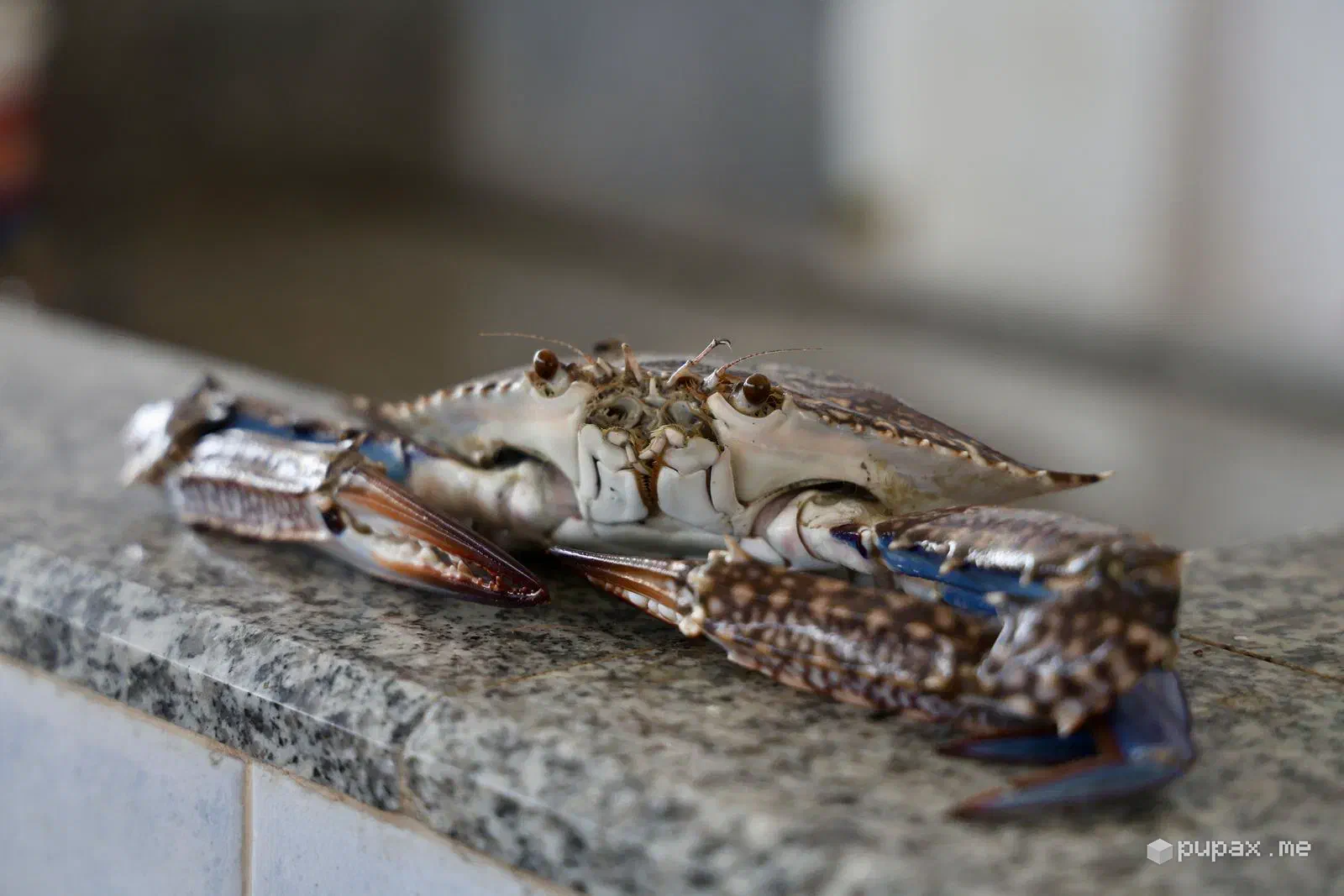
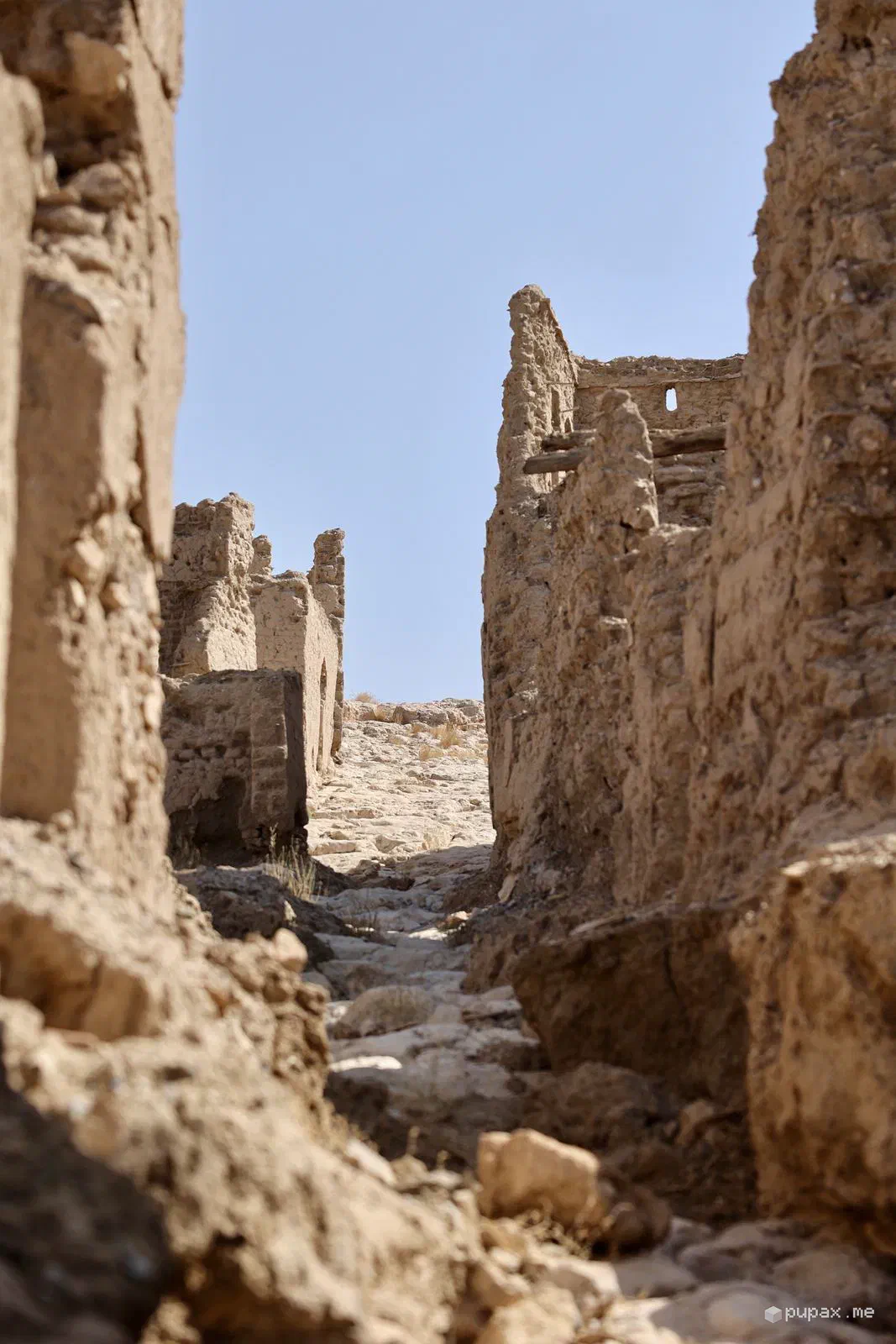
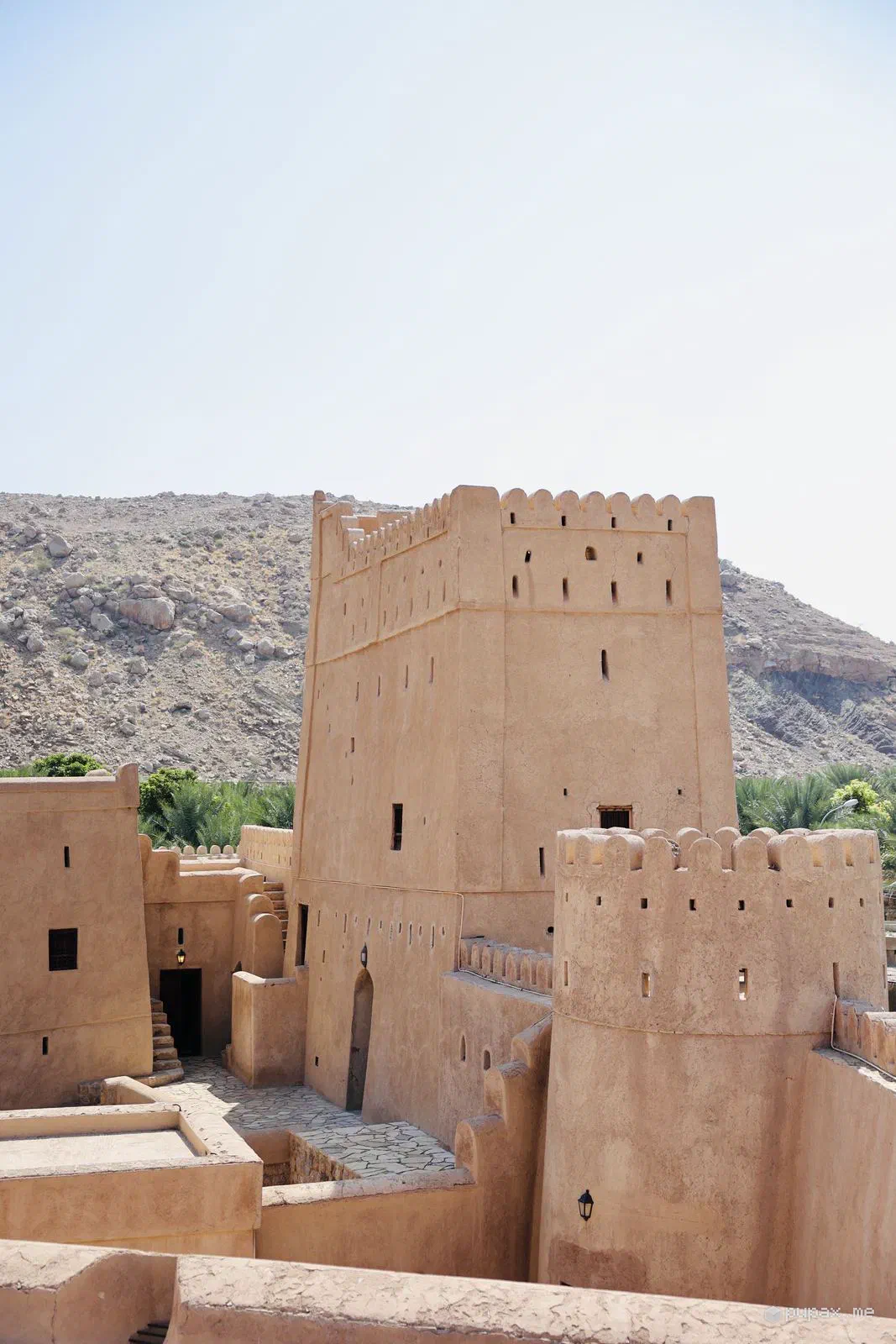
2 November was the long transfer day: from the coast we drove north across the interior, on gravel roads running straight to the horizon, where at one point the dashboard read 117, all the way to Ibri. The next day brought abandoned mud-brick villages and sand-coloured forts, then up to Sohar, where on the morning of the 4th we went to the fish market: blue crabs, and whole tuna cut into steaks on the counter.
The mountains
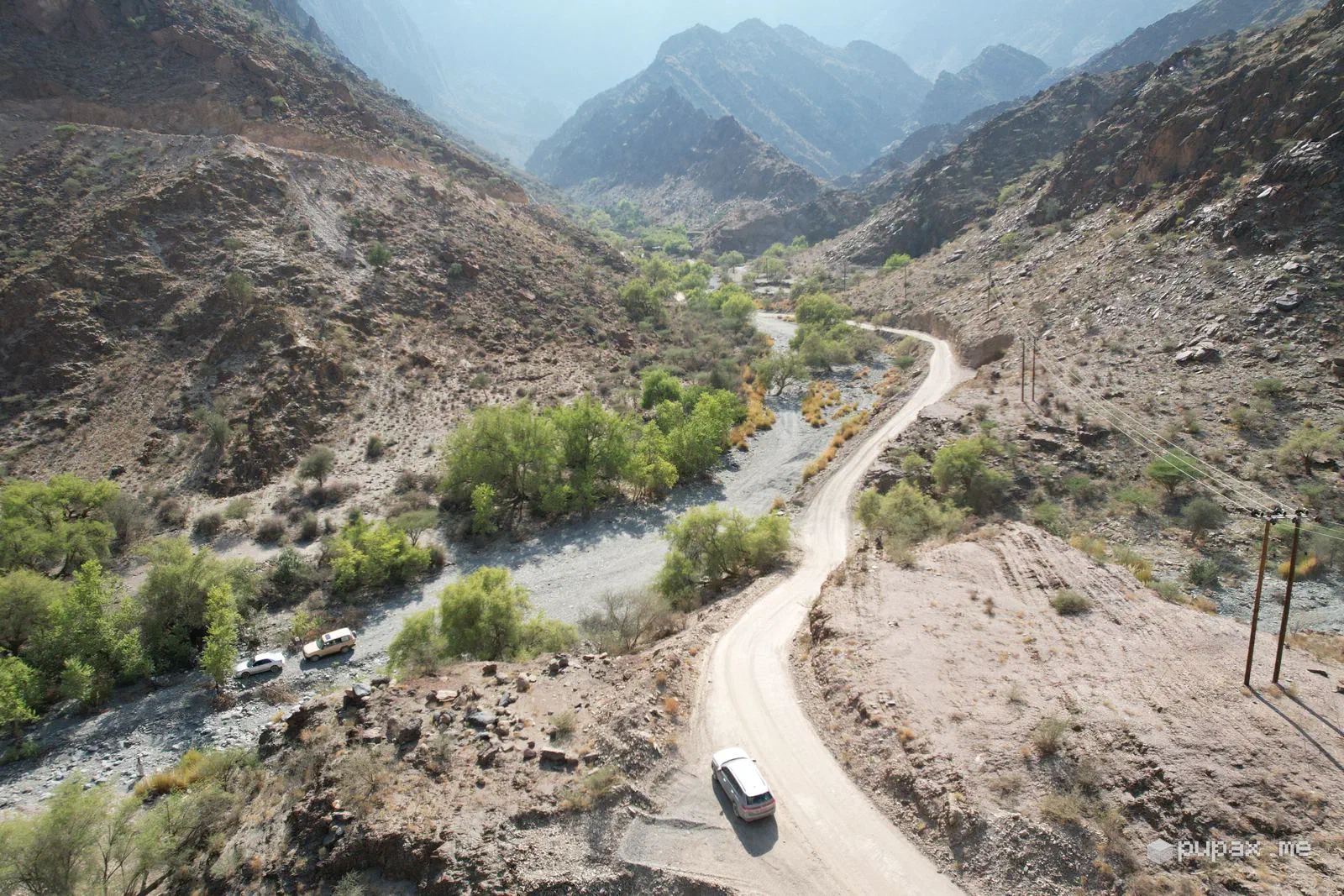
From Sohar we headed back into the Hajar mountains, on gravel tracks cut into the mountainside between Bilad Sayt and Wadi Bani Awf, as far as Al Hamra.
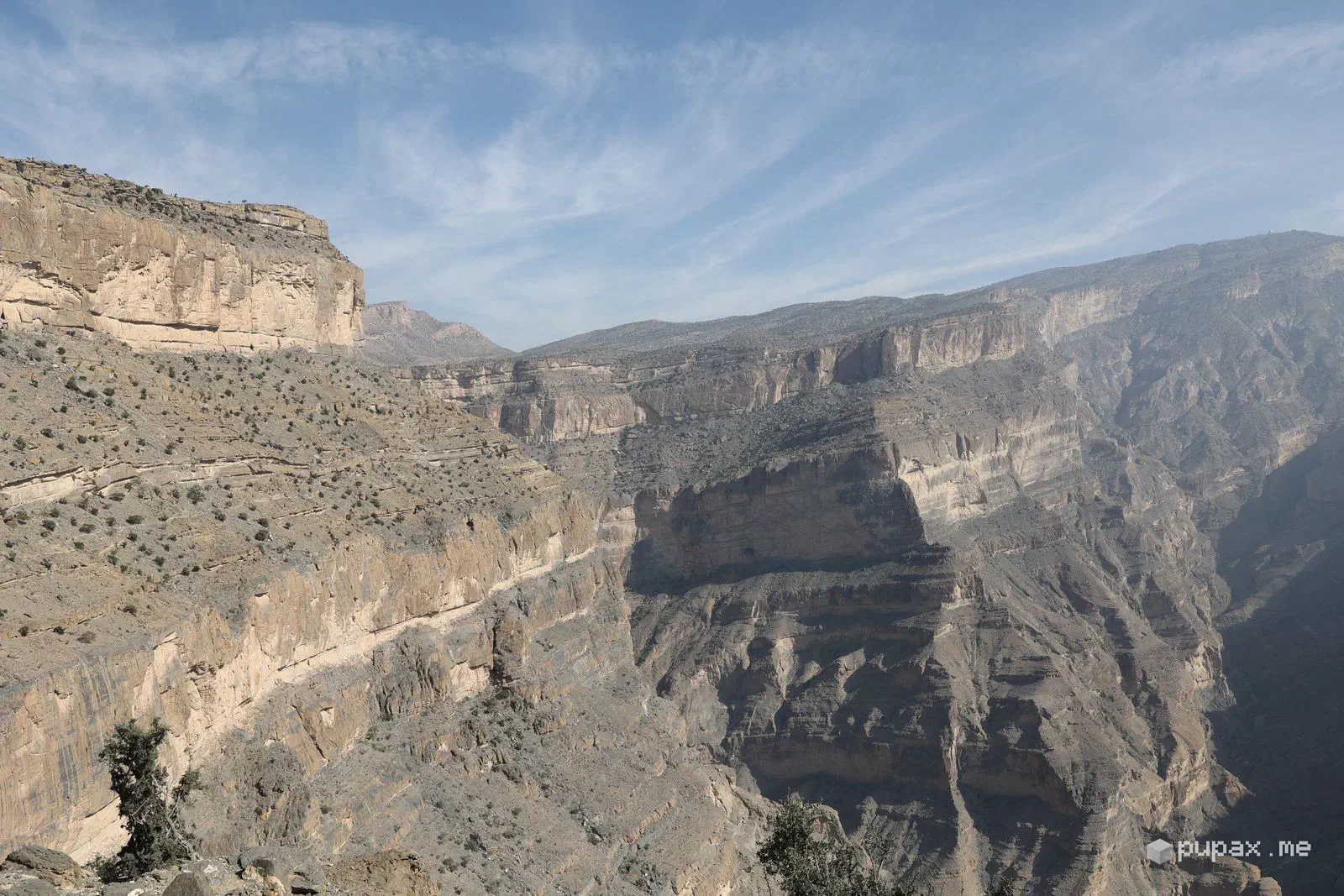
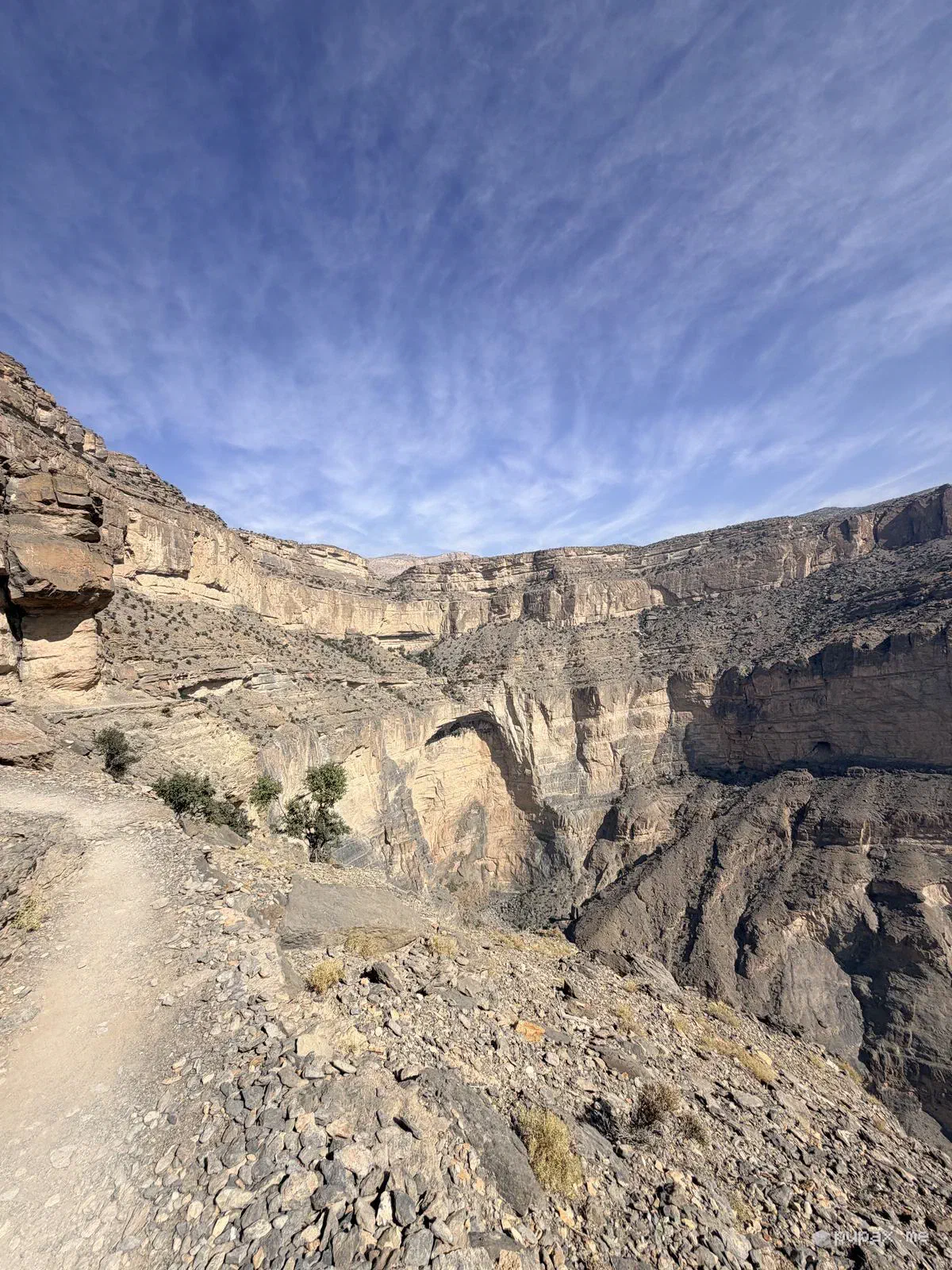
Then Jebel Shams, the highest mountain in Oman, and the thing that impressed me most. We did the Balcony Walk, the path that runs along the rim of the Wadi Ghul canyon, with a sheer drop on one side and layered rock walls on the other.
Nizwa
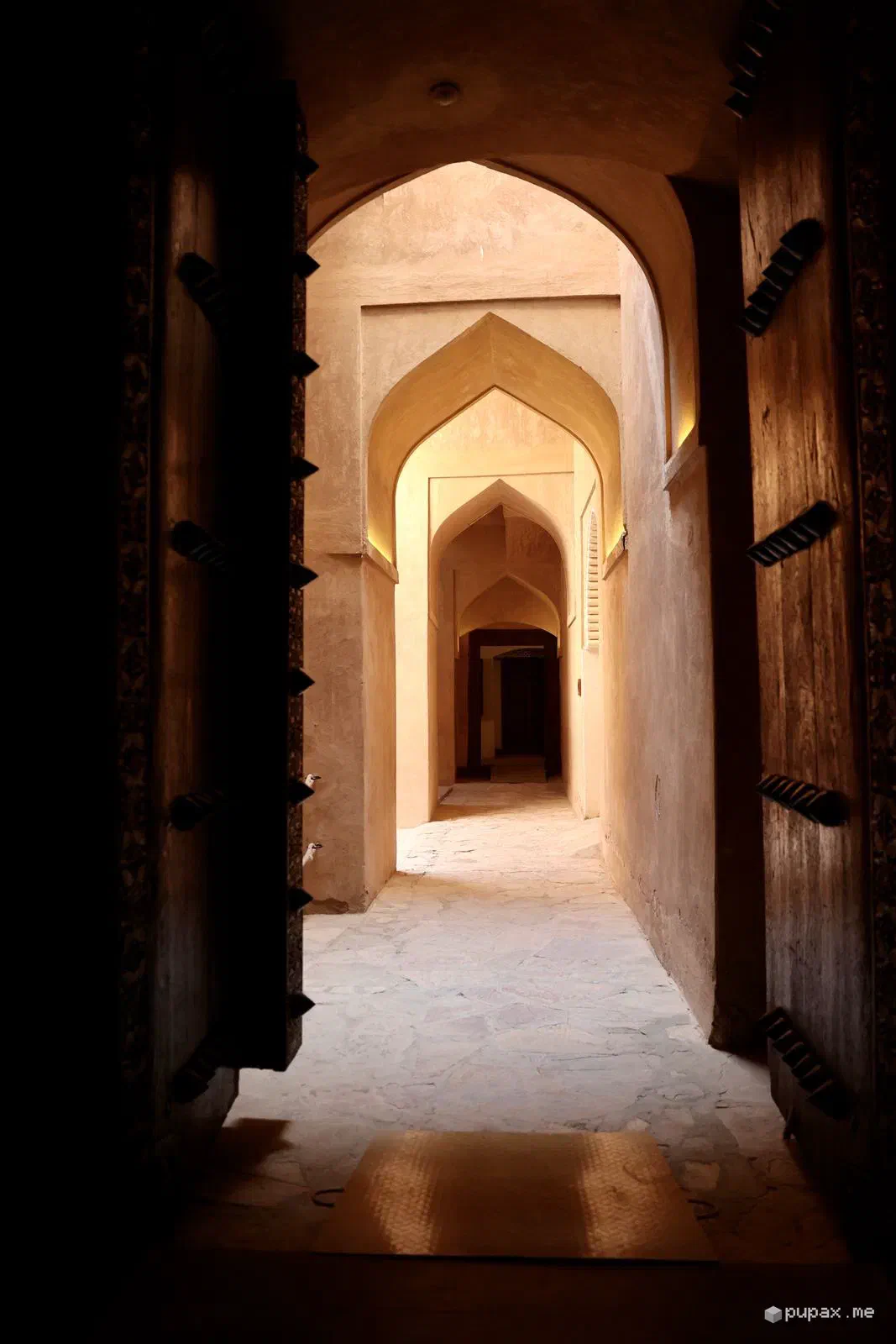
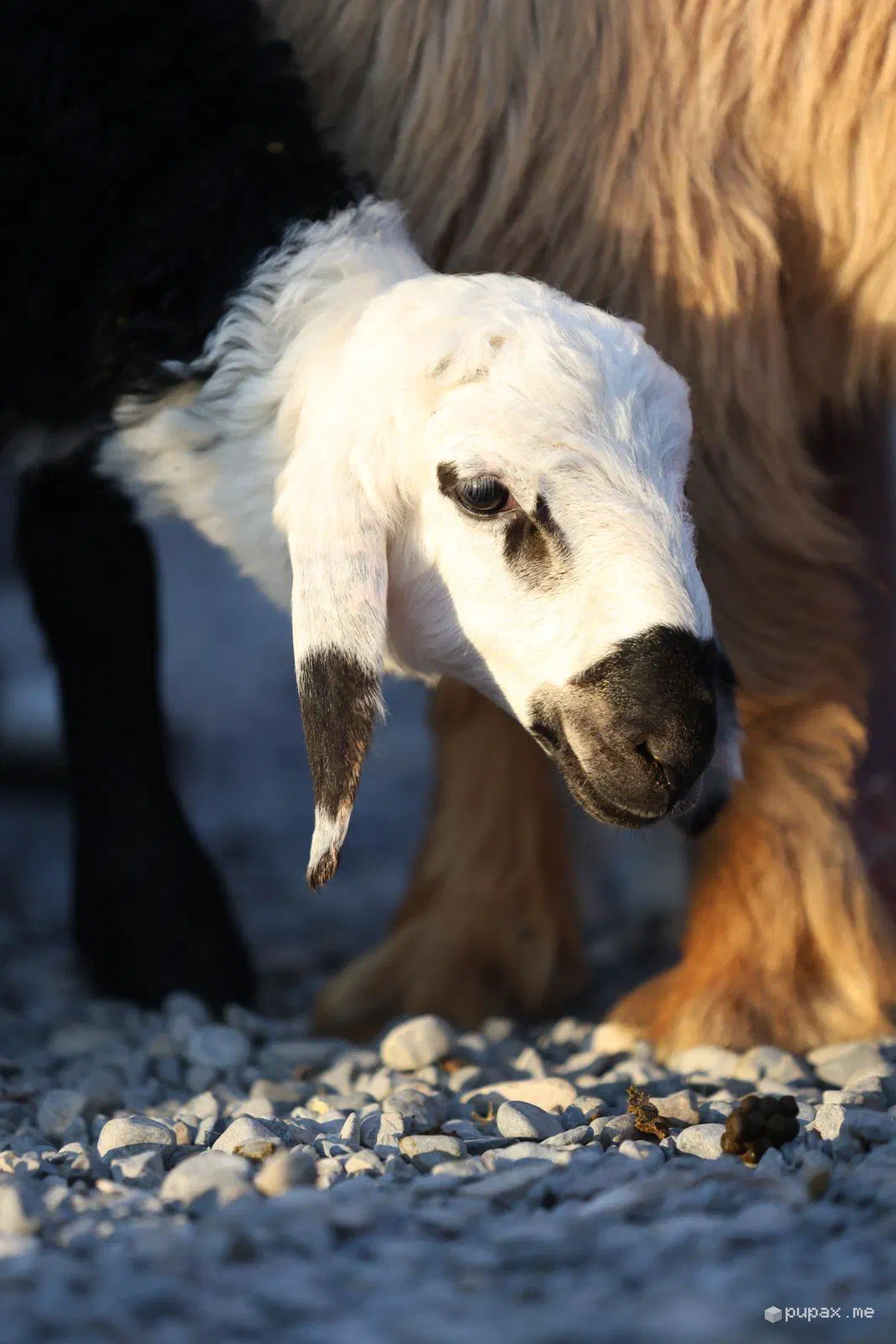
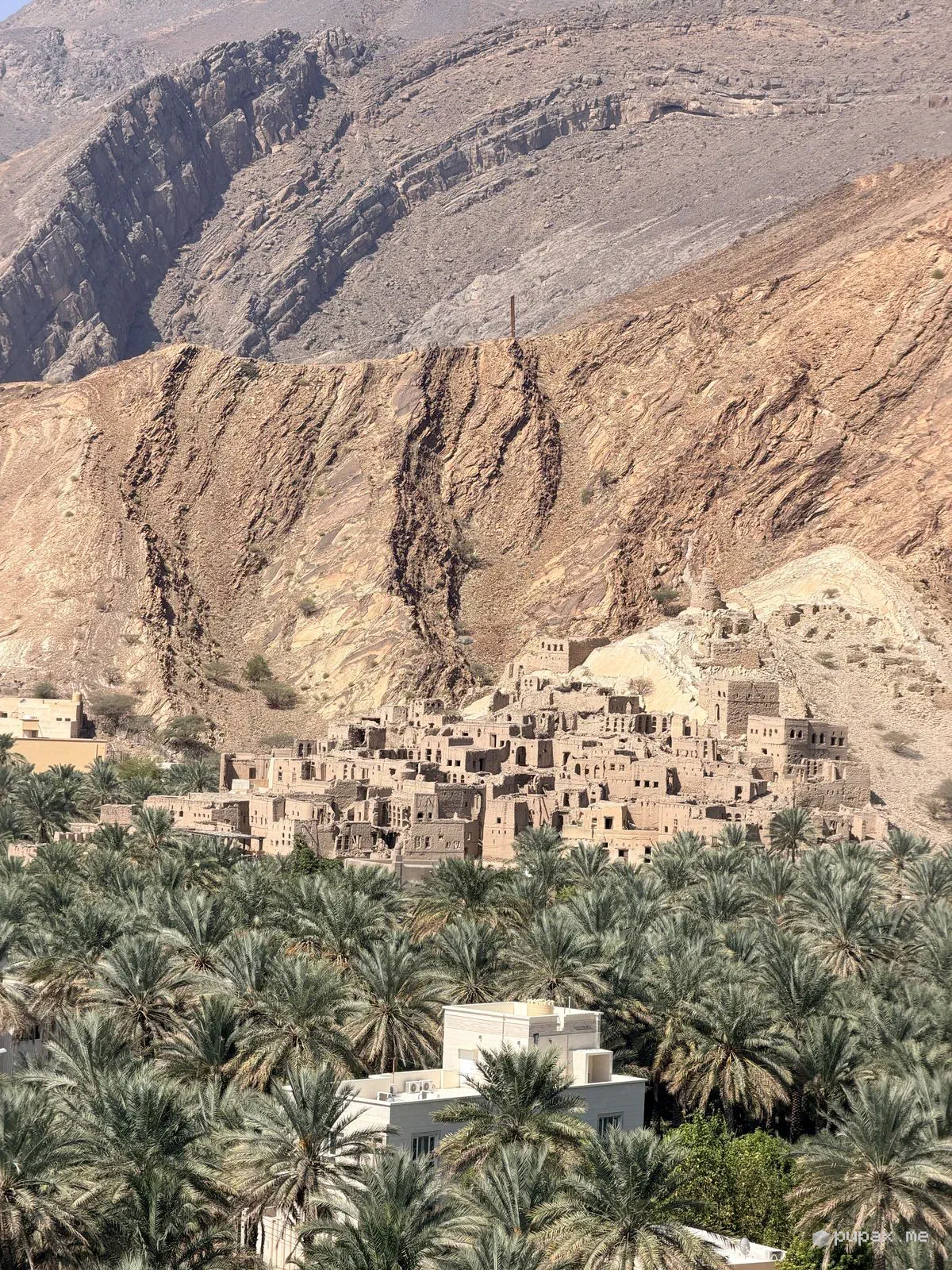
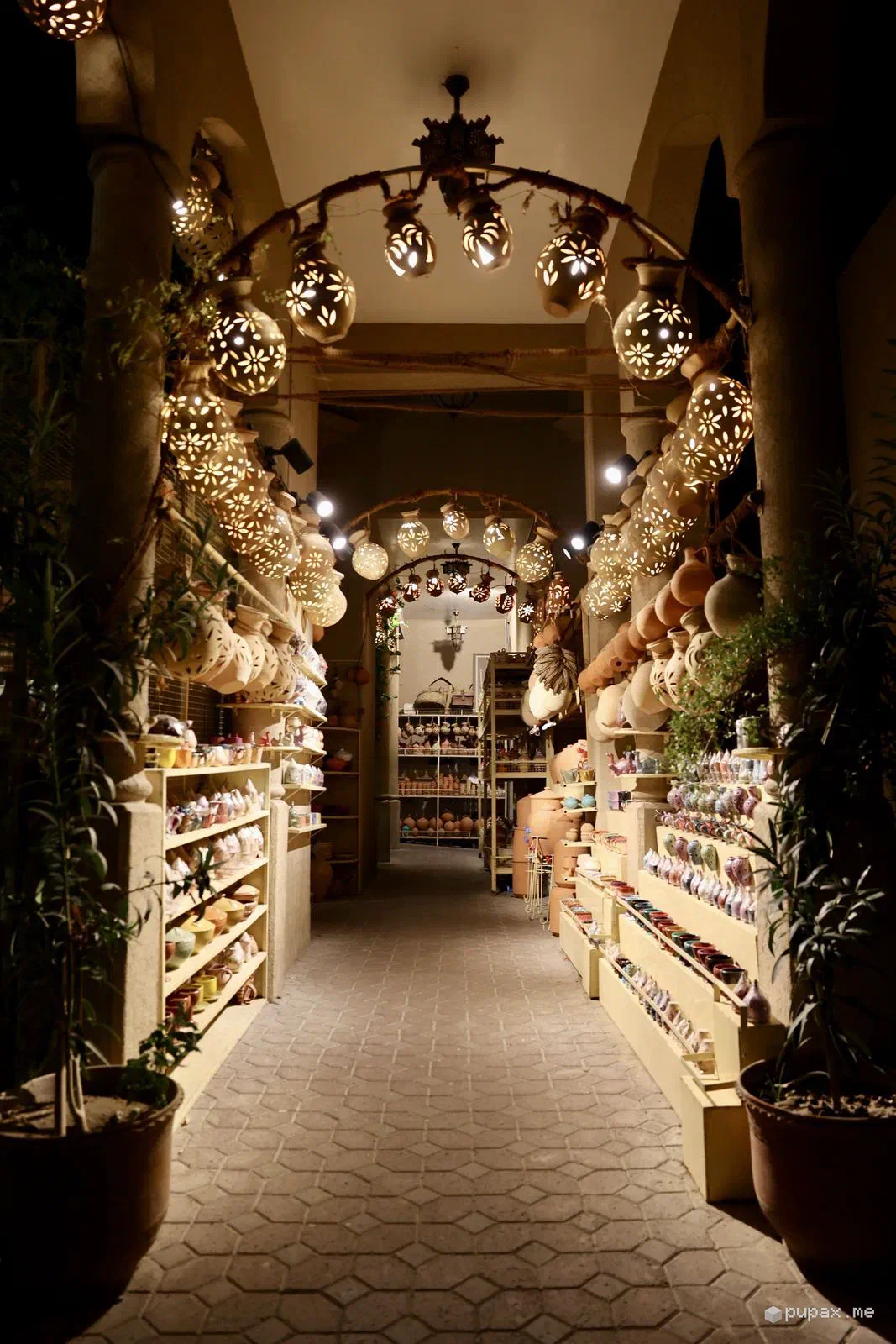
On the way down from Jebel Shams came the Oman Across Ages museum, and in the evening the Nizwa souq, with its terracotta lamps lit. Then, on Friday morning, the livestock market: men in dishdashas sitting in a circle and goats paraded round the ring while the haggling goes on. Before heading back to the coast, Birkat al Mouz, an abandoned mud-brick village above the palm grove.
Out at sea
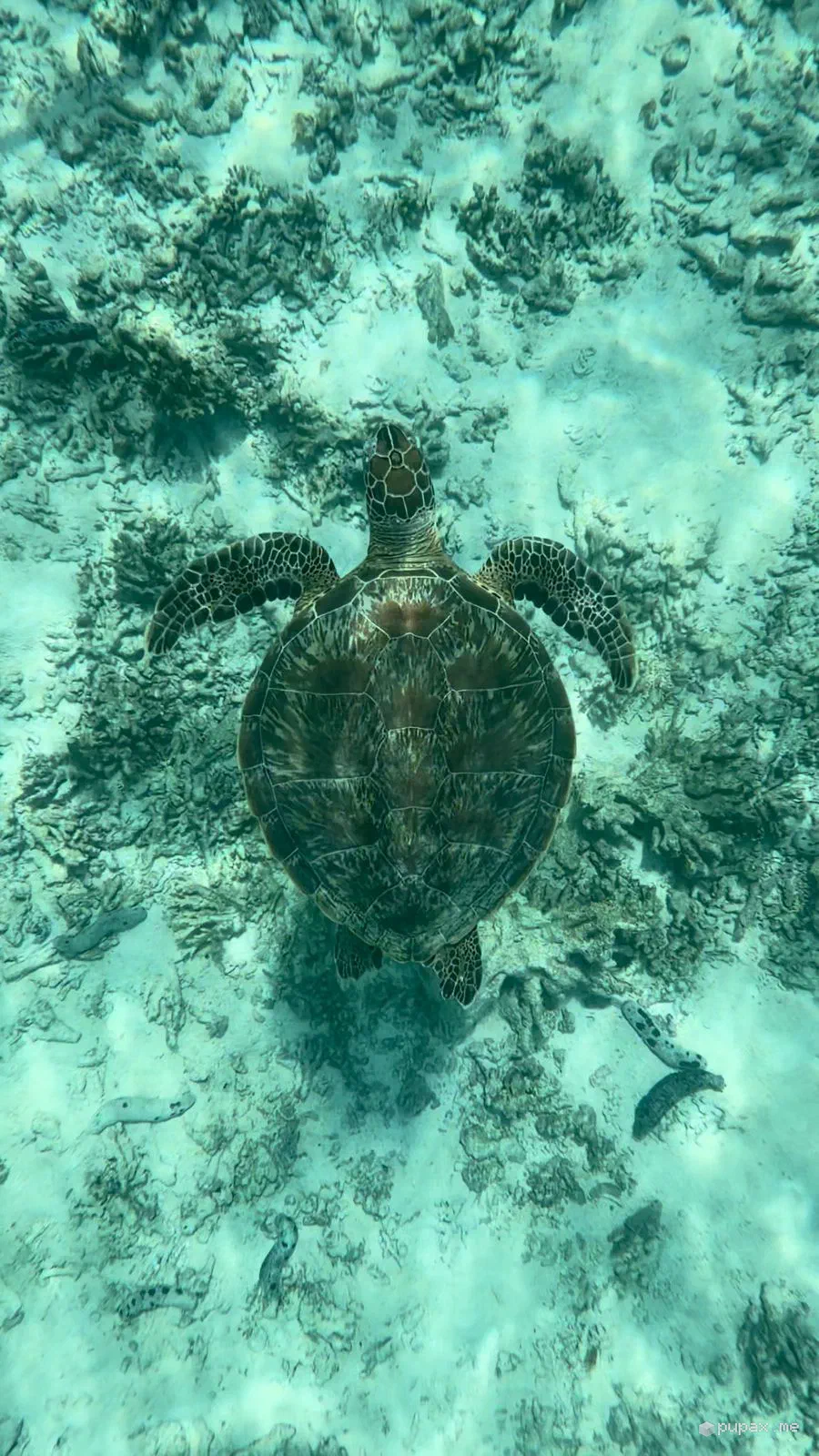
We spent the last day at sea, at the Daymaniyat Islands: snorkelling with green turtles swimming over the coral. The day after, we were on the flight home.
Practical notes
- You need a 4x4: between dunes, gravel roads and mountain tracks, it’s essential.
- It’s very hot, even at the turn of October and November.
- Everything is cheap.